
PA.9B, SEC 1, intrprting grphs (51)
Quiz Summary
0 of 51 Questions completed
Questions:
Information
You have already completed the quiz before. Hence you can not start it again.
Quiz is loading…
You must sign in or sign up to start the quiz.
You must first complete the following:
Results
Results
0 of 51 Questions answered correctly
Your time:
Time has elapsed
You have reached 0 of 0 point(s), (0)
Earned Point(s): 0 of 0, (0)
0 Essay(s) Pending (Possible Point(s): 0)
Categories
- Not categorized 0%
- 1
- 2
- 3
- 4
- 5
- 6
- 7
- 8
- 9
- 10
- 11
- 12
- 13
- 14
- 15
- 16
- 17
- 18
- 19
- 20
- 21
- 22
- 23
- 24
- 25
- 26
- 27
- 28
- 29
- 30
- 31
- 32
- 33
- 34
- 35
- 36
- 37
- 38
- 39
- 40
- 41
- 42
- 43
- 44
- 45
- 46
- 47
- 48
- 49
- 50
- 51
- Current
- Review / Skip
- Answered
- Correct
- Incorrect
-
Question 1 of 51
1. Question
Topic: Interpreting Kinematic Graphs.

During which segment of the distance–time graph (A, B, or C) is the object travelling at the greatest speed?

Select the correct option below: ⬇️
CorrectIncorrectHint
Distance-Time Graphs 📈
A positive gradient (the steepness of a graph line) means the object is moving away from its starting point.
A negative gradient shows it’s heading back towards the start (negative motion).
The steeper the line, the faster the object’s speed. A shallower line means it’s moving more slowly.
A flat line means no movement at all.
If it curves upwards, the speed is increasing over time (acceleration).
If it curves downwards, the speed is decreasing (deceleration).
Hang in there—these slopes are easier to read than you think! 🤪
Speed-Time Graphs 🚀
A positive gradient means acceleration (the speed goes up over time).
A negative gradient shows deceleration (speed is going down).
A horizontal line means a constant speed—no change.
If it curves upwards, the object’s speeding up more and more quickly (acceleration).
If it curves downwards, the object’s slowing down faster and faster (deceleration).
Keep calm, look at the lines carefully, and the graph will tell you all you need to know!
-
Question 2 of 51
2. Question
Topic: Interpreting Kinematic Graphs.
During which segment of the distance–time graph is the object accelerating?

Select the correct option below: ⬇️
]
CorrectIncorrectHint
Distance-Time Graphs 📈
A positive gradient (the steepness of a graph line) means the object is moving away from its starting point.
A negative gradient shows it’s heading back towards the start (negative motion).
The steeper the line, the faster the object’s speed. A shallower line means it’s moving more slowly.
A flat line means no movement at all.
If it curves upwards, the speed is increasing over time (acceleration).
If it curves downwards, the speed is decreasing (deceleration).
Hang in there—these slopes are easier to read than you think! 🤪
Speed-Time Graphs 🚀
A positive gradient means acceleration (the speed goes up over time).
A negative gradient shows deceleration (speed is going down).
A horizontal line means a constant speed—no change.
If it curves upwards, the object’s speeding up more and more quickly (acceleration).
If it curves downwards, the object’s slowing down faster and faster (deceleration).
Keep calm, look at the lines carefully, and the graph will tell you all you need to know!
-
Question 3 of 51
3. Question
Topic: Interpreting Kinematic Graphs.
During which segment of the distance–time graph (A, B, or C) is the object stationary?

Select the correct option below: ⬇️
CorrectIncorrectHint
Distance-Time Graphs 📈
A positive gradient (the steepness of a graph line) means the object is moving away from its starting point.
A negative gradient shows it’s heading back towards the start (negative motion).
The steeper the line, the faster the object’s speed. A shallower line means it’s moving more slowly.
A flat line means no movement at all.
If it curves upwards, the speed is increasing over time (acceleration).
If it curves downwards, the speed is decreasing (deceleration).
Hang in there—these slopes are easier to read than you think! 🤪
Speed-Time Graphs 🚀
A positive gradient means acceleration (the speed goes up over time).
A negative gradient shows deceleration (speed is going down).
A horizontal line means a constant speed—no change.
If it curves upwards, the object’s speeding up more and more quickly (acceleration).
If it curves downwards, the object’s slowing down faster and faster (deceleration).
Keep calm, look at the lines carefully, and the graph will tell you all you need to know!
-
Question 4 of 51
4. Question
Topic: Interpreting Kinematic Graphs.
Which feature of the speed–time graph can be used to find the total distance travelled along the journey?

Select the correct option below: ⬇️
CorrectIncorrectHint
Distance-Time Graphs 📈
A positive gradient (the steepness of a graph line) means the object is moving away from its starting point.
A negative gradient shows it’s heading back towards the start (negative motion).
The steeper the line, the faster the object’s speed. A shallower line means it’s moving more slowly.
A flat line means no movement at all.
If it curves upwards, the speed is increasing over time (acceleration).
If it curves downwards, the speed is decreasing (deceleration).
Hang in there—these slopes are easier to read than you think! 🤪
Speed-Time Graphs 🚀
A positive gradient means acceleration (the speed goes up over time).
A negative gradient shows deceleration (speed is going down).
A horizontal line means a constant speed—no change.
If it curves upwards, the object’s speeding up more and more quickly (acceleration).
If it curves downwards, the object’s slowing down faster and faster (deceleration).
Keep calm, look at the lines carefully, and the graph will tell you all you need to know!
-
Question 5 of 51
5. Question
Topic: Interpreting Kinematic Graphs.
During which segment of the distance–time graph (A, B, or C) is the object travelling at the lowest speed?
Select the correct option below: ⬇️
CorrectIncorrectHint
Distance-Time Graphs 📈
A positive gradient (the steepness of a graph line) means the object is moving away from its starting point.
A negative gradient shows it’s heading back towards the start (negative motion).
The steeper the line, the faster the object’s speed. A shallower line means it’s moving more slowly.
A flat line means no movement at all.
If it curves upwards, the speed is increasing over time (acceleration).
If it curves downwards, the speed is decreasing (deceleration).
Hang in there—these slopes are easier to read than you think! 🤪
Speed-Time Graphs 🚀
A positive gradient means acceleration (the speed goes up over time).
A negative gradient shows deceleration (speed is going down).
A horizontal line means a constant speed—no change.
If it curves upwards, the object’s speeding up more and more quickly (acceleration).
If it curves downwards, the object’s slowing down faster and faster (deceleration).
Keep calm, look at the lines carefully, and the graph will tell you all you need to know!
-
Question 6 of 51
6. Question
Topic: Interpreting Kinematic Graphs.
What is the displacement for the object when the journey is complete?

Select the correct option below: ⬇️
CorrectIncorrectHint
Distance-Time Graphs 📈
A positive gradient (the steepness of a graph line) means the object is moving away from its starting point.
A negative gradient shows it’s heading back towards the start (negative motion).
The steeper the line, the faster the object’s speed. A shallower line means it’s moving more slowly.
A flat line means no movement at all.
If it curves upwards, the speed is increasing over time (acceleration).
If it curves downwards, the speed is decreasing (deceleration).
Hang in there—these slopes are easier to read than you think! 🤪
Speed-Time Graphs 🚀
A positive gradient means acceleration (the speed goes up over time).
A negative gradient shows deceleration (speed is going down).
A horizontal line means a constant speed—no change.
If it curves upwards, the object’s speeding up more and more quickly (acceleration).
If it curves downwards, the object’s slowing down faster and faster (deceleration).
Keep calm, look at the lines carefully, and the graph will tell you all you need to know!
-
Question 7 of 51
7. Question
Topic: Interpreting Kinematic Graphs.
What type of motion does the graph show?

Select the correct option below: ⬇️
CorrectIncorrectHint
Distance-Time Graphs 📈
A positive gradient (the steepness of a graph line) means the object is moving away from its starting point.
A negative gradient shows it’s heading back towards the start (negative motion).
The steeper the line, the faster the object’s speed. A shallower line means it’s moving more slowly.
A flat line means no movement at all.
If it curves upwards, the speed is increasing over time (acceleration).
If it curves downwards, the speed is decreasing (deceleration).
Hang in there—these slopes are easier to read than you think! 🤪
Speed-Time Graphs 🚀
A positive gradient means acceleration (the speed goes up over time).
A negative gradient shows deceleration (speed is going down).
A horizontal line means a constant speed—no change.
If it curves upwards, the object’s speeding up more and more quickly (acceleration).
If it curves downwards, the object’s slowing down faster and faster (deceleration).
Keep calm, look at the lines carefully, and the graph will tell you all you need to know!
-
Question 8 of 51
8. Question
Topic: Interpreting Kinematic Graphs.
Which segment of the distance–time graph (A, B, or C) shows the object remaining stationary?
Select the correct option below: ⬇️
CorrectIncorrectHint
Distance-Time Graphs 📈
A positive gradient (the steepness of a graph line) means the object is moving away from its starting point.
A negative gradient shows it’s heading back towards the start (negative motion).
The steeper the line, the faster the object’s speed. A shallower line means it’s moving more slowly.
A flat line means no movement at all.
If it curves upwards, the speed is increasing over time (acceleration).
If it curves downwards, the speed is decreasing (deceleration).
Hang in there—these slopes are easier to read than you think! 🤪
Speed-Time Graphs 🚀
A positive gradient means acceleration (the speed goes up over time).
A negative gradient shows deceleration (speed is going down).
A horizontal line means a constant speed—no change.
If it curves upwards, the object’s speeding up more and more quickly (acceleration).
If it curves downwards, the object’s slowing down faster and faster (deceleration).
Keep calm, look at the lines carefully, and the graph will tell you all you need to know!
-
Question 9 of 51
9. Question
Topic: Interpreting Kinematic Graphs.
What is the displacement for the object when the journey is complete?
Select the correct option below: ⬇️
CorrectIncorrectHint
Distance-Time Graphs 📈
A positive gradient (the steepness of a graph line) means the object is moving away from its starting point.
A negative gradient shows it’s heading back towards the start (negative motion).
The steeper the line, the faster the object’s speed. A shallower line means it’s moving more slowly.
A flat line means no movement at all.
If it curves upwards, the speed is increasing over time (acceleration).
If it curves downwards, the speed is decreasing (deceleration).
Hang in there—these slopes are easier to read than you think! 🤪
Speed-Time Graphs 🚀
A positive gradient means acceleration (the speed goes up over time).
A negative gradient shows deceleration (speed is going down).
A horizontal line means a constant speed—no change.
If it curves upwards, the object’s speeding up more and more quickly (acceleration).
If it curves downwards, the object’s slowing down faster and faster (deceleration).
Keep calm, look at the lines carefully, and the graph will tell you all you need to know!
-
Question 10 of 51
10. Question
Topic: Interpreting Kinematic Graphs.
What type of motion does the graph show?

Select the correct option below: ⬇️
CorrectIncorrectHint
Distance-Time Graphs 📈
A positive gradient (the steepness of a graph line) means the object is moving away from its starting point.
A negative gradient shows it’s heading back towards the start (negative motion).
The steeper the line, the faster the object’s speed. A shallower line means it’s moving more slowly.
A flat line means no movement at all.
If it curves upwards, the speed is increasing over time (acceleration).
If it curves downwards, the speed is decreasing (deceleration).
Hang in there—these slopes are easier to read than you think! 🤪
Speed-Time Graphs 🚀
A positive gradient means acceleration (the speed goes up over time).
A negative gradient shows deceleration (speed is going down).
A horizontal line means a constant speed—no change.
If it curves upwards, the object’s speeding up more and more quickly (acceleration).
If it curves downwards, the object’s slowing down faster and faster (deceleration).
Keep calm, look at the lines carefully, and the graph will tell you all you need to know!
-
Question 11 of 51
11. Question
Topic: Interpreting Kinematic Graphs.
Which segment of the distance–time graph (A, B, or C) shows the object remaining stationary?
Select the correct option below: ⬇️
CorrectIncorrectHint
Distance-Time Graphs 📈
A positive gradient (the steepness of a graph line) means the object is moving away from its starting point.
A negative gradient shows it’s heading back towards the start (negative motion).
The steeper the line, the faster the object’s speed. A shallower line means it’s moving more slowly.
A flat line means no movement at all.
If it curves upwards, the speed is increasing over time (acceleration).
If it curves downwards, the speed is decreasing (deceleration).
Hang in there—these slopes are easier to read than you think! 🤪
Speed-Time Graphs 🚀
A positive gradient means acceleration (the speed goes up over time).
A negative gradient shows deceleration (speed is going down).
A horizontal line means a constant speed—no change.
If it curves upwards, the object’s speeding up more and more quickly (acceleration).
If it curves downwards, the object’s slowing down faster and faster (deceleration).
Keep calm, look at the lines carefully, and the graph will tell you all you need to know!
-
Question 12 of 51
12. Question
Topic: Interpreting Kinematic Graphs.
During which segment of the distance–time graph (A, B, or C) is the object stationary?
Select the correct option below: ⬇️
CorrectIncorrectHint
Distance-Time Graphs 📈
A positive gradient (the steepness of a graph line) means the object is moving away from its starting point.
A negative gradient shows it’s heading back towards the start (negative motion).
The steeper the line, the faster the object’s speed. A shallower line means it’s moving more slowly.
A flat line means no movement at all.
If it curves upwards, the speed is increasing over time (acceleration).
If it curves downwards, the speed is decreasing (deceleration).
Hang in there—these slopes are easier to read than you think! 🤪
Speed-Time Graphs 🚀
A positive gradient means acceleration (the speed goes up over time).
A negative gradient shows deceleration (speed is going down).
A horizontal line means a constant speed—no change.
If it curves upwards, the object’s speeding up more and more quickly (acceleration).
If it curves downwards, the object’s slowing down faster and faster (deceleration).
Keep calm, look at the lines carefully, and the graph will tell you all you need to know!
-
Question 13 of 51
13. Question
Topic: Interpreting Kinematic Graphs.
What type of motion does the graph show?

Select the correct option below: ⬇️
CorrectIncorrectHint
Distance-Time Graphs 📈
A positive gradient (the steepness of a graph line) means the object is moving away from its starting point.
A negative gradient shows it’s heading back towards the start (negative motion).
The steeper the line, the faster the object’s speed. A shallower line means it’s moving more slowly.
A flat line means no movement at all.
If it curves upwards, the speed is increasing over time (acceleration).
If it curves downwards, the speed is decreasing (deceleration).
Hang in there—these slopes are easier to read than you think! 🤪
Speed-Time Graphs 🚀
A positive gradient means acceleration (the speed goes up over time).
A negative gradient shows deceleration (speed is going down).
A horizontal line means a constant speed—no change.
If it curves upwards, the object’s speeding up more and more quickly (acceleration).
If it curves downwards, the object’s slowing down faster and faster (deceleration).
Keep calm, look at the lines carefully, and the graph will tell you all you need to know!
-
Question 14 of 51
14. Question
Topic: Interpreting Kinematic Graphs.
During which segment of the distance–time graph (A, B, or C) is the object moving the fastest?

Select the correct option below: ⬇️
CorrectIncorrectHint
Distance-Time Graphs 📈
A positive gradient (the steepness of a graph line) means the object is moving away from its starting point.
A negative gradient shows it’s heading back towards the start (negative motion).
The steeper the line, the faster the object’s speed. A shallower line means it’s moving more slowly.
A flat line means no movement at all.
If it curves upwards, the speed is increasing over time (acceleration).
If it curves downwards, the speed is decreasing (deceleration).
Hang in there—these slopes are easier to read than you think! 🤪
Speed-Time Graphs 🚀
A positive gradient means acceleration (the speed goes up over time).
A negative gradient shows deceleration (speed is going down).
A horizontal line means a constant speed—no change.
If it curves upwards, the object’s speeding up more and more quickly (acceleration).
If it curves downwards, the object’s slowing down faster and faster (deceleration).
Keep calm, look at the lines carefully, and the graph will tell you all you need to know!
-
Question 15 of 51
15. Question
Topic: Interpreting Kinematic Graphs.
During which segment of the distance–time graph (A, B, or C) is the object moving the fastest?
Select the correct option below: ⬇️
CorrectIncorrectHint
Distance-Time Graphs 📈
A positive gradient (the steepness of a graph line) means the object is moving away from its starting point.
A negative gradient shows it’s heading back towards the start (negative motion).
The steeper the line, the faster the object’s speed. A shallower line means it’s moving more slowly.
A flat line means no movement at all.
If it curves upwards, the speed is increasing over time (acceleration).
If it curves downwards, the speed is decreasing (deceleration).
Hang in there—these slopes are easier to read than you think! 🤪
Speed-Time Graphs 🚀
A positive gradient means acceleration (the speed goes up over time).
A negative gradient shows deceleration (speed is going down).
A horizontal line means a constant speed—no change.
If it curves upwards, the object’s speeding up more and more quickly (acceleration).
If it curves downwards, the object’s slowing down faster and faster (deceleration).
Keep calm, look at the lines carefully, and the graph will tell you all you need to know!
-
Question 16 of 51
16. Question
Topic: Interpreting Kinematic Graphs.
What type of motion does the graph show?

Select the correct option below: ⬇️
CorrectIncorrectHint
Distance-Time Graphs 📈
A positive gradient (the steepness of a graph line) means the object is moving away from its starting point.
A negative gradient shows it’s heading back towards the start (negative motion).
The steeper the line, the faster the object’s speed. A shallower line means it’s moving more slowly.
A flat line means no movement at all.
If it curves upwards, the speed is increasing over time (acceleration).
If it curves downwards, the speed is decreasing (deceleration).
Hang in there—these slopes are easier to read than you think! 🤪
Speed-Time Graphs 🚀
A positive gradient means acceleration (the speed goes up over time).
A negative gradient shows deceleration (speed is going down).
A horizontal line means a constant speed—no change.
If it curves upwards, the object’s speeding up more and more quickly (acceleration).
If it curves downwards, the object’s slowing down faster and faster (deceleration).
Keep calm, look at the lines carefully, and the graph will tell you all you need to know!
-
Question 17 of 51
17. Question
Topic: Interpreting Kinematic Graphs.
During which segment of the distance–time graph (A, B, or C) is the object moving the slowest?
Select the correct option below: ⬇️
CorrectIncorrectHint
Distance-Time Graphs 📈
A positive gradient (the steepness of a graph line) means the object is moving away from its starting point.
A negative gradient shows it’s heading back towards the start (negative motion).
The steeper the line, the faster the object’s speed. A shallower line means it’s moving more slowly.
A flat line means no movement at all.
If it curves upwards, the speed is increasing over time (acceleration).
If it curves downwards, the speed is decreasing (deceleration).
Hang in there—these slopes are easier to read than you think! 🤪
Speed-Time Graphs 🚀
A positive gradient means acceleration (the speed goes up over time).
A negative gradient shows deceleration (speed is going down).
A horizontal line means a constant speed—no change.
If it curves upwards, the object’s speeding up more and more quickly (acceleration).
If it curves downwards, the object’s slowing down faster and faster (deceleration).
Keep calm, look at the lines carefully, and the graph will tell you all you need to know!
-
Question 18 of 51
18. Question
Topic: Interpreting Kinematic Graphs.
During which segment of the distance–time graph (A, B, or C) is the object moving the slowest?
Select the correct option below: ⬇️
CorrectIncorrectHint
Distance-Time Graphs 📈
A positive gradient (the steepness of a graph line) means the object is moving away from its starting point.
A negative gradient shows it’s heading back towards the start (negative motion).
The steeper the line, the faster the object’s speed. A shallower line means it’s moving more slowly.
A flat line means no movement at all.
If it curves upwards, the speed is increasing over time (acceleration).
If it curves downwards, the speed is decreasing (deceleration).
Hang in there—these slopes are easier to read than you think! 🤪
Speed-Time Graphs 🚀
A positive gradient means acceleration (the speed goes up over time).
A negative gradient shows deceleration (speed is going down).
A horizontal line means a constant speed—no change.
If it curves upwards, the object’s speeding up more and more quickly (acceleration).
If it curves downwards, the object’s slowing down faster and faster (deceleration).
Keep calm, look at the lines carefully, and the graph will tell you all you need to know!
-
Question 19 of 51
19. Question
Topic: Interpreting Kinematic Graphs.
Which part of the graph shows deceleration back to the original starting point?

Select the correct option below: ⬇️
CorrectIncorrectHint
Distance-Time Graphs 📈
A positive gradient (the steepness of a graph line) means the object is moving away from its starting point.
A negative gradient shows it’s heading back towards the start (negative motion).
The steeper the line, the faster the object’s speed. A shallower line means it’s moving more slowly.
A flat line means no movement at all.
If it curves upwards, the speed is increasing over time (acceleration).
If it curves downwards, the speed is decreasing (deceleration).
Hang in there—these slopes are easier to read than you think! 🤪
Speed-Time Graphs 🚀
A positive gradient means acceleration (the speed goes up over time).
A negative gradient shows deceleration (speed is going down).
A horizontal line means a constant speed—no change.
If it curves upwards, the object’s speeding up more and more quickly (acceleration).
If it curves downwards, the object’s slowing down faster and faster (deceleration).
Keep calm, look at the lines carefully, and the graph will tell you all you need to know!
-
Question 20 of 51
20. Question
Topic: Interpreting Kinematic Graphs.
During which segment of the distance–time graph (A, B, C, or D) is the object moving the slowest?
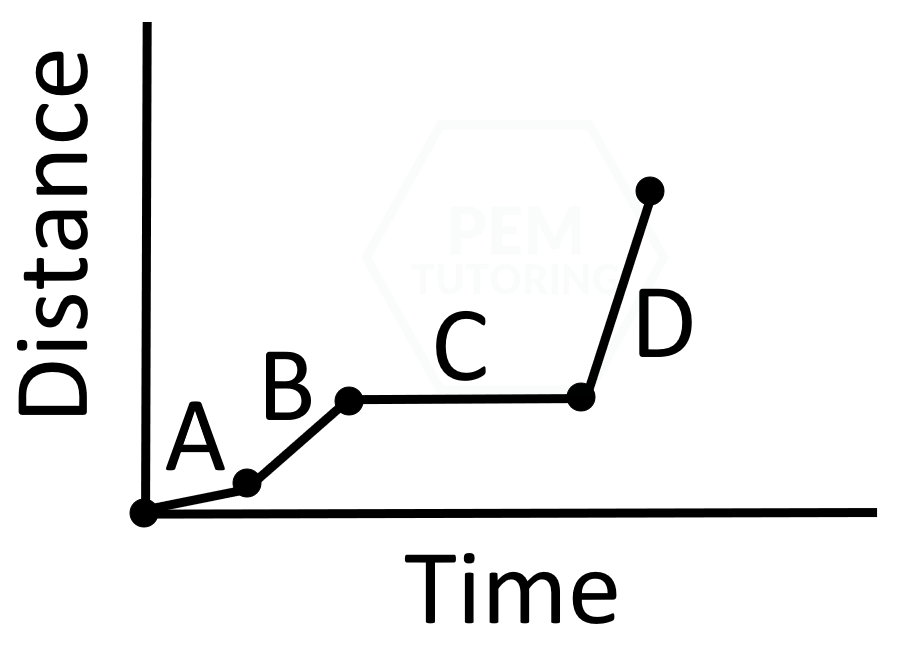
Select the correct option below: ⬇️
CorrectIncorrectHint
Distance-Time Graphs 📈
A positive gradient (the steepness of a graph line) means the object is moving away from its starting point.
A negative gradient shows it’s heading back towards the start (negative motion).
The steeper the line, the faster the object’s speed. A shallower line means it’s moving more slowly.
A flat line means no movement at all.
If it curves upwards, the speed is increasing over time (acceleration).
If it curves downwards, the speed is decreasing (deceleration).
Hang in there—these slopes are easier to read than you think! 🤪
Speed-Time Graphs 🚀
A positive gradient means acceleration (the speed goes up over time).
A negative gradient shows deceleration (speed is going down).
A horizontal line means a constant speed—no change.
If it curves upwards, the object’s speeding up more and more quickly (acceleration).
If it curves downwards, the object’s slowing down faster and faster (deceleration).
Keep calm, look at the lines carefully, and the graph will tell you all you need to know!
-
Question 21 of 51
21. Question
Topic: Interpreting Kinematic Graphs.
During which segment of the distance–time graph (A, B, C, or D) is the object moving the slowest?

Select the correct option below: ⬇️
CorrectIncorrectHint
Distance-Time Graphs 📈
A positive gradient (the steepness of a graph line) means the object is moving away from its starting point.
A negative gradient shows it’s heading back towards the start (negative motion).
The steeper the line, the faster the object’s speed. A shallower line means it’s moving more slowly.
A flat line means no movement at all.
If it curves upwards, the speed is increasing over time (acceleration).
If it curves downwards, the speed is decreasing (deceleration).
Hang in there—these slopes are easier to read than you think! 🤪
Speed-Time Graphs 🚀
A positive gradient means acceleration (the speed goes up over time).
A negative gradient shows deceleration (speed is going down).
A horizontal line means a constant speed—no change.
If it curves upwards, the object’s speeding up more and more quickly (acceleration).
If it curves downwards, the object’s slowing down faster and faster (deceleration).
Keep calm, look at the lines carefully, and the graph will tell you all you need to know!
-
Question 22 of 51
22. Question
Topic: Interpreting Kinematic Graphs.
Which line shows a faster speed?

Select the correct option below: ⬇️
CorrectIncorrectHint
Distance-Time Graphs 📈
A positive gradient (the steepness of a graph line) means the object is moving away from its starting point.
A negative gradient shows it’s heading back towards the start (negative motion).
The steeper the line, the faster the object’s speed. A shallower line means it’s moving more slowly.
A flat line means no movement at all.
If it curves upwards, the speed is increasing over time (acceleration).
If it curves downwards, the speed is decreasing (deceleration).
Hang in there—these slopes are easier to read than you think! 🤪
Speed-Time Graphs 🚀
A positive gradient means acceleration (the speed goes up over time).
A negative gradient shows deceleration (speed is going down).
A horizontal line means a constant speed—no change.
If it curves upwards, the object’s speeding up more and more quickly (acceleration).
If it curves downwards, the object’s slowing down faster and faster (deceleration).
Keep calm, look at the lines carefully, and the graph will tell you all you need to know!
-
Question 23 of 51
23. Question
Topic: Interpreting Kinematic Graphs.
During which segment of the distance–time graph (A, B, C, or D) is the object moving the fastest?
Select the correct option below: ⬇️
CorrectIncorrectHint
Distance-Time Graphs 📈
A positive gradient (the steepness of a graph line) means the object is moving away from its starting point.
A negative gradient shows it’s heading back towards the start (negative motion).
The steeper the line, the faster the object’s speed. A shallower line means it’s moving more slowly.
A flat line means no movement at all.
If it curves upwards, the speed is increasing over time (acceleration).
If it curves downwards, the speed is decreasing (deceleration).
Hang in there—these slopes are easier to read than you think! 🤪
Speed-Time Graphs 🚀
A positive gradient means acceleration (the speed goes up over time).
A negative gradient shows deceleration (speed is going down).
A horizontal line means a constant speed—no change.
If it curves upwards, the object’s speeding up more and more quickly (acceleration).
If it curves downwards, the object’s slowing down faster and faster (deceleration).
Keep calm, look at the lines carefully, and the graph will tell you all you need to know!
-
Question 24 of 51
24. Question
Topic: Interpreting Kinematic Graphs.
During which segment of the distance–time graph (A, B, C, or D) is the object moving the fastest?
Select the correct option below: ⬇️
CorrectIncorrectHint
Distance-Time Graphs 📈
A positive gradient (the steepness of a graph line) means the object is moving away from its starting point.
A negative gradient shows it’s heading back towards the start (negative motion).
The steeper the line, the faster the object’s speed. A shallower line means it’s moving more slowly.
A flat line means no movement at all.
If it curves upwards, the speed is increasing over time (acceleration).
If it curves downwards, the speed is decreasing (deceleration).
Hang in there—these slopes are easier to read than you think! 🤪
Speed-Time Graphs 🚀
A positive gradient means acceleration (the speed goes up over time).
A negative gradient shows deceleration (speed is going down).
A horizontal line means a constant speed—no change.
If it curves upwards, the object’s speeding up more and more quickly (acceleration).
If it curves downwards, the object’s slowing down faster and faster (deceleration).
Keep calm, look at the lines carefully, and the graph will tell you all you need to know!
-
Question 25 of 51
25. Question
Topic: Interpreting Kinematic Graphs.
Which line shows a slower speed?
Select the correct option below: ⬇️
CorrectIncorrectHint
Distance-Time Graphs 📈
A positive gradient (the steepness of a graph line) means the object is moving away from its starting point.
A negative gradient shows it’s heading back towards the start (negative motion).
The steeper the line, the faster the object’s speed. A shallower line means it’s moving more slowly.
A flat line means no movement at all.
If it curves upwards, the speed is increasing over time (acceleration).
If it curves downwards, the speed is decreasing (deceleration).
Hang in there—these slopes are easier to read than you think! 🤪
Speed-Time Graphs 🚀
A positive gradient means acceleration (the speed goes up over time).
A negative gradient shows deceleration (speed is going down).
A horizontal line means a constant speed—no change.
If it curves upwards, the object’s speeding up more and more quickly (acceleration).
If it curves downwards, the object’s slowing down faster and faster (deceleration).
Keep calm, look at the lines carefully, and the graph will tell you all you need to know!
-
Question 26 of 51
26. Question
Topic: Interpreting Kinematic Graphs.
During which segment of the distance–time graph (A, B, C, or D) is the object stationary?
Select the correct option below: ⬇️
CorrectIncorrectHint
Distance-Time Graphs 📈
A positive gradient (the steepness of a graph line) means the object is moving away from its starting point.
A negative gradient shows it’s heading back towards the start (negative motion).
The steeper the line, the faster the object’s speed. A shallower line means it’s moving more slowly.
A flat line means no movement at all.
If it curves upwards, the speed is increasing over time (acceleration).
If it curves downwards, the speed is decreasing (deceleration).
Hang in there—these slopes are easier to read than you think! 🤪
Speed-Time Graphs 🚀
A positive gradient means acceleration (the speed goes up over time).
A negative gradient shows deceleration (speed is going down).
A horizontal line means a constant speed—no change.
If it curves upwards, the object’s speeding up more and more quickly (acceleration).
If it curves downwards, the object’s slowing down faster and faster (deceleration).
Keep calm, look at the lines carefully, and the graph will tell you all you need to know!
-
Question 27 of 51
27. Question
Topic: Interpreting Kinematic Graphs.
During which segment(s) of the distance–time graph is the object stationary?
Select the correct options below: ⬇️
CorrectIncorrectHint
Distance-Time Graphs 📈
A positive gradient (the steepness of a graph line) means the object is moving away from its starting point.
A negative gradient shows it’s heading back towards the start (negative motion).
The steeper the line, the faster the object’s speed. A shallower line means it’s moving more slowly.
A flat line means no movement at all.
If it curves upwards, the speed is increasing over time (acceleration).
If it curves downwards, the speed is decreasing (deceleration).
Hang in there—these slopes are easier to read than you think! 🤪
Speed-Time Graphs 🚀
A positive gradient means acceleration (the speed goes up over time).
A negative gradient shows deceleration (speed is going down).
A horizontal line means a constant speed—no change.
If it curves upwards, the object’s speeding up more and more quickly (acceleration).
If it curves downwards, the object’s slowing down faster and faster (deceleration).
Keep calm, look at the lines carefully, and the graph will tell you all you need to know!
-
Question 28 of 51
28. Question
Topic: Interpreting Kinematic Graphs.
Which line shows a slower speed?

Select the correct option below: ⬇️
CorrectIncorrectHint
Distance-Time Graphs 📈
A positive gradient (the steepness of a graph line) means the object is moving away from its starting point.
A negative gradient shows it’s heading back towards the start (negative motion).
The steeper the line, the faster the object’s speed. A shallower line means it’s moving more slowly.
A flat line means no movement at all.
If it curves upwards, the speed is increasing over time (acceleration).
If it curves downwards, the speed is decreasing (deceleration).
Hang in there—these slopes are easier to read than you think! 🤪
Speed-Time Graphs 🚀
A positive gradient means acceleration (the speed goes up over time).
A negative gradient shows deceleration (speed is going down).
A horizontal line means a constant speed—no change.
If it curves upwards, the object’s speeding up more and more quickly (acceleration).
If it curves downwards, the object’s slowing down faster and faster (deceleration).
Keep calm, look at the lines carefully, and the graph will tell you all you need to know!
-
Question 29 of 51
29. Question
Topic: Interpreting Kinematic Graphs.
During which segment of the distance–time graph (A, B, C, or D) is the object stationary?

Select the correct option below: ⬇️
CorrectIncorrectHint
Distance-Time Graphs 📈
A positive gradient (the steepness of a graph line) means the object is moving away from its starting point.
A negative gradient shows it’s heading back towards the start (negative motion).
The steeper the line, the faster the object’s speed. A shallower line means it’s moving more slowly.
A flat line means no movement at all.
If it curves upwards, the speed is increasing over time (acceleration).
If it curves downwards, the speed is decreasing (deceleration).
Hang in there—these slopes are easier to read than you think! 🤪
Speed-Time Graphs 🚀
A positive gradient means acceleration (the speed goes up over time).
A negative gradient shows deceleration (speed is going down).
A horizontal line means a constant speed—no change.
If it curves upwards, the object’s speeding up more and more quickly (acceleration).
If it curves downwards, the object’s slowing down faster and faster (deceleration).
Keep calm, look at the lines carefully, and the graph will tell you all you need to know!
-
Question 30 of 51
30. Question
Topic: Interpreting Kinematic Graphs.
What is the total distance travelled by the object?
Select the correct option below: ⬇️
CorrectIncorrectHint
Distance-Time Graphs 📈
A positive gradient (the steepness of a graph line) means the object is moving away from its starting point.
A negative gradient shows it’s heading back towards the start (negative motion).
The steeper the line, the faster the object’s speed. A shallower line means it’s moving more slowly.
A flat line means no movement at all.
If it curves upwards, the speed is increasing over time (acceleration).
If it curves downwards, the speed is decreasing (deceleration).
Hang in there—these slopes are easier to read than you think! 🤪
Speed-Time Graphs 🚀
A positive gradient means acceleration (the speed goes up over time).
A negative gradient shows deceleration (speed is going down).
A horizontal line means a constant speed—no change.
If it curves upwards, the object’s speeding up more and more quickly (acceleration).
If it curves downwards, the object’s slowing down faster and faster (deceleration).
Keep calm, look at the lines carefully, and the graph will tell you all you need to know!
-
Question 31 of 51
31. Question
Topic: Interpreting Kinematic Graphs.
Which line shows a faster speed?
Select the correct option below: ⬇️
CorrectIncorrectHint
Distance-Time Graphs 📈
A positive gradient (the steepness of a graph line) means the object is moving away from its starting point.
A negative gradient shows it’s heading back towards the start (negative motion).
The steeper the line, the faster the object’s speed. A shallower line means it’s moving more slowly.
A flat line means no movement at all.
If it curves upwards, the speed is increasing over time (acceleration).
If it curves downwards, the speed is decreasing (deceleration).
Hang in there—these slopes are easier to read than you think! 🤪
Speed-Time Graphs 🚀
A positive gradient means acceleration (the speed goes up over time).
A negative gradient shows deceleration (speed is going down).
A horizontal line means a constant speed—no change.
If it curves upwards, the object’s speeding up more and more quickly (acceleration).
If it curves downwards, the object’s slowing down faster and faster (deceleration).
Keep calm, look at the lines carefully, and the graph will tell you all you need to know!
-
Question 32 of 51
32. Question
Topic: Interpreting Kinematic Graphs.
During which segment of the distance–time graph (A, B, C, or D) is the object moving the fastest?
Select the correct option below: ⬇️
CorrectIncorrectHint
Distance-Time Graphs 📈
A positive gradient (the steepness of a graph line) means the object is moving away from its starting point.
A negative gradient shows it’s heading back towards the start (negative motion).
The steeper the line, the faster the object’s speed. A shallower line means it’s moving more slowly.
A flat line means no movement at all.
If it curves upwards, the speed is increasing over time (acceleration).
If it curves downwards, the speed is decreasing (deceleration).
Hang in there—these slopes are easier to read than you think! 🤪
Speed-Time Graphs 🚀
A positive gradient means acceleration (the speed goes up over time).
A negative gradient shows deceleration (speed is going down).
A horizontal line means a constant speed—no change.
If it curves upwards, the object’s speeding up more and more quickly (acceleration).
If it curves downwards, the object’s slowing down faster and faster (deceleration).
Keep calm, look at the lines carefully, and the graph will tell you all you need to know!
-
Question 33 of 51
33. Question
Topic: Interpreting Kinematic Graphs.
What is the displacement of the object?
Select the correct option below: ⬇️
CorrectIncorrectHint
Distance-Time Graphs 📈
A positive gradient (the steepness of a graph line) means the object is moving away from its starting point.
A negative gradient shows it’s heading back towards the start (negative motion).
The steeper the line, the faster the object’s speed. A shallower line means it’s moving more slowly.
A flat line means no movement at all.
If it curves upwards, the speed is increasing over time (acceleration).
If it curves downwards, the speed is decreasing (deceleration).
Hang in there—these slopes are easier to read than you think! 🤪
Speed-Time Graphs 🚀
A positive gradient means acceleration (the speed goes up over time).
A negative gradient shows deceleration (speed is going down).
A horizontal line means a constant speed—no change.
If it curves upwards, the object’s speeding up more and more quickly (acceleration).
If it curves downwards, the object’s slowing down faster and faster (deceleration).
Keep calm, look at the lines carefully, and the graph will tell you all you need to know!
-
Question 34 of 51
34. Question
Topic: Interpreting Kinematic Graphs.
Is the motion shown in this distance–time graph possible?

Select the correct option below: ⬇️
CorrectIncorrectHint
Distance-Time Graphs 📈
A positive gradient (the steepness of a graph line) means the object is moving away from its starting point.
A negative gradient shows it’s heading back towards the start (negative motion).
The steeper the line, the faster the object’s speed. A shallower line means it’s moving more slowly.
A flat line means no movement at all.
If it curves upwards, the speed is increasing over time (acceleration).
If it curves downwards, the speed is decreasing (deceleration).
Hang in there—these slopes are easier to read than you think! 🤪
Speed-Time Graphs 🚀
A positive gradient means acceleration (the speed goes up over time).
A negative gradient shows deceleration (speed is going down).
A horizontal line means a constant speed—no change.
If it curves upwards, the object’s speeding up more and more quickly (acceleration).
If it curves downwards, the object’s slowing down faster and faster (deceleration).
Keep calm, look at the lines carefully, and the graph will tell you all you need to know!
-
Question 35 of 51
35. Question
Topic: Interpreting Kinematic Graphs.
During which segment of the distance–time graph (A, B, C, or D) is the object moving the slowest?
Select the correct option below: ⬇️
CorrectIncorrectHint
Distance-Time Graphs 📈
A positive gradient (the steepness of a graph line) means the object is moving away from its starting point.
A negative gradient shows it’s heading back towards the start (negative motion).
The steeper the line, the faster the object’s speed. A shallower line means it’s moving more slowly.
A flat line means no movement at all.
If it curves upwards, the speed is increasing over time (acceleration).
If it curves downwards, the speed is decreasing (deceleration).
Hang in there—these slopes are easier to read than you think! 🤪
Speed-Time Graphs 🚀
A positive gradient means acceleration (the speed goes up over time).
A negative gradient shows deceleration (speed is going down).
A horizontal line means a constant speed—no change.
If it curves upwards, the object’s speeding up more and more quickly (acceleration).
If it curves downwards, the object’s slowing down faster and faster (deceleration).
Keep calm, look at the lines carefully, and the graph will tell you all you need to know!
-
Question 36 of 51
36. Question
Topic: Interpreting Kinematic Graphs.
During which segment of the distance–time graph (A, B, or C) is the object accelerating?

Select the correct option below: ⬇️
CorrectIncorrectHint
Distance-Time Graphs 📈
A positive gradient (the steepness of a graph line) means the object is moving away from its starting point.
A negative gradient shows it’s heading back towards the start (negative motion).
The steeper the line, the faster the object’s speed. A shallower line means it’s moving more slowly.
A flat line means no movement at all.
If it curves upwards, the speed is increasing over time (acceleration).
If it curves downwards, the speed is decreasing (deceleration).
Hang in there—these slopes are easier to read than you think! 🤪
Speed-Time Graphs 🚀
A positive gradient means acceleration (the speed goes up over time).
A negative gradient shows deceleration (speed is going down).
A horizontal line means a constant speed—no change.
If it curves upwards, the object’s speeding up more and more quickly (acceleration).
If it curves downwards, the object’s slowing down faster and faster (deceleration).
Keep calm, look at the lines carefully, and the graph will tell you all you need to know!
-
Question 37 of 51
37. Question
Topic: Interpreting Kinematic Graphs.
What does this speed–time graph show?

Select the correct option below: ⬇️
CorrectIncorrectHint
Distance-Time Graphs 📈
A positive gradient (the steepness of a graph line) means the object is moving away from its starting point.
A negative gradient shows it’s heading back towards the start (negative motion).
The steeper the line, the faster the object’s speed. A shallower line means it’s moving more slowly.
A flat line means no movement at all.
If it curves upwards, the speed is increasing over time (acceleration).
If it curves downwards, the speed is decreasing (deceleration).
Hang in there—these slopes are easier to read than you think! 🤪
Speed-Time Graphs 🚀
A positive gradient means acceleration (the speed goes up over time).
A negative gradient shows deceleration (speed is going down).
A horizontal line means a constant speed—no change.
If it curves upwards, the object’s speeding up more and more quickly (acceleration).
If it curves downwards, the object’s slowing down faster and faster (deceleration).
Keep calm, look at the lines carefully, and the graph will tell you all you need to know!
-
Question 38 of 51
38. Question
Topic: Interpreting Kinematic Graphs.
During which segment of the distance–time graph (A, B, or C) is the object moving the slowest?
Select the correct option below: ⬇️
CorrectIncorrectHint
Distance-Time Graphs 📈
A positive gradient (the steepness of a graph line) means the object is moving away from its starting point.
A negative gradient shows it’s heading back towards the start (negative motion).
The steeper the line, the faster the object’s speed. A shallower line means it’s moving more slowly.
A flat line means no movement at all.
If it curves upwards, the speed is increasing over time (acceleration).
If it curves downwards, the speed is decreasing (deceleration).
Hang in there—these slopes are easier to read than you think! 🤪
Speed-Time Graphs 🚀
A positive gradient means acceleration (the speed goes up over time).
A negative gradient shows deceleration (speed is going down).
A horizontal line means a constant speed—no change.
If it curves upwards, the object’s speeding up more and more quickly (acceleration).
If it curves downwards, the object’s slowing down faster and faster (deceleration).
Keep calm, look at the lines carefully, and the graph will tell you all you need to know!
-
Question 39 of 51
39. Question
Topic: Interpreting Kinematic Graphs.
During which segment of the distance–time graph (A, B, or C) is the object moving at a constant speed?
Select the correct option below: ⬇️
CorrectIncorrectHint
Distance-Time Graphs 📈
A positive gradient (the steepness of a graph line) means the object is moving away from its starting point.
A negative gradient shows it’s heading back towards the start (negative motion).
The steeper the line, the faster the object’s speed. A shallower line means it’s moving more slowly.
A flat line means no movement at all.
If it curves upwards, the speed is increasing over time (acceleration).
If it curves downwards, the speed is decreasing (deceleration).
Hang in there—these slopes are easier to read than you think! 🤪
Speed-Time Graphs 🚀
A positive gradient means acceleration (the speed goes up over time).
A negative gradient shows deceleration (speed is going down).
A horizontal line means a constant speed—no change.
If it curves upwards, the object’s speeding up more and more quickly (acceleration).
If it curves downwards, the object’s slowing down faster and faster (deceleration).
Keep calm, look at the lines carefully, and the graph will tell you all you need to know!
-
Question 40 of 51
40. Question
Topic: Interpreting Kinematic Graphs.
Which segment on the speed–time graph shows the object is decelerating (slowing down) at a constant rate?
Select the correct option below: ⬇️
CorrectIncorrectHint
Distance-Time Graphs 📈
A positive gradient (the steepness of a graph line) means the object is moving away from its starting point.
A negative gradient shows it’s heading back towards the start (negative motion).
The steeper the line, the faster the object’s speed. A shallower line means it’s moving more slowly.
A flat line means no movement at all.
If it curves upwards, the speed is increasing over time (acceleration).
If it curves downwards, the speed is decreasing (deceleration).
Hang in there—these slopes are easier to read than you think! 🤪
Speed-Time Graphs 🚀
A positive gradient means acceleration (the speed goes up over time).
A negative gradient shows deceleration (speed is going down).
A horizontal line means a constant speed—no change.
If it curves upwards, the object’s speeding up more and more quickly (acceleration).
If it curves downwards, the object’s slowing down faster and faster (deceleration).
Keep calm, look at the lines carefully, and the graph will tell you all you need to know!
-
Question 41 of 51
41. Question
Topic: Interpreting Kinematic Graphs.
During which segment of the distance–time graph (A, B, or C) is the object moving the fastest?
Select the correct option below: ⬇️
CorrectIncorrectHint
Distance-Time Graphs 📈
A positive gradient (the steepness of a graph line) means the object is moving away from its starting point.
A negative gradient shows it’s heading back towards the start (negative motion).
The steeper the line, the faster the object’s speed. A shallower line means it’s moving more slowly.
A flat line means no movement at all.
If it curves upwards, the speed is increasing over time (acceleration).
If it curves downwards, the speed is decreasing (deceleration).
Hang in there—these slopes are easier to read than you think! 🤪
Speed-Time Graphs 🚀
A positive gradient means acceleration (the speed goes up over time).
A negative gradient shows deceleration (speed is going down).
A horizontal line means a constant speed—no change.
If it curves upwards, the object’s speeding up more and more quickly (acceleration).
If it curves downwards, the object’s slowing down faster and faster (deceleration).
Keep calm, look at the lines carefully, and the graph will tell you all you need to know!
-
Question 42 of 51
42. Question
Topic: Interpreting Kinematic Graphs.
During which segment of the distance–time graph (A, B, or C) is the object moving at a constant speed?

Select the correct option below: ⬇️
CorrectIncorrectHint
Distance-Time Graphs 📈
A positive gradient (the steepness of a graph line) means the object is moving away from its starting point.
A negative gradient shows it’s heading back towards the start (negative motion).
The steeper the line, the faster the object’s speed. A shallower line means it’s moving more slowly.
A flat line means no movement at all.
If it curves upwards, the speed is increasing over time (acceleration).
If it curves downwards, the speed is decreasing (deceleration).
Hang in there—these slopes are easier to read than you think! 🤪
Speed-Time Graphs 🚀
A positive gradient means acceleration (the speed goes up over time).
A negative gradient shows deceleration (speed is going down).
A horizontal line means a constant speed—no change.
If it curves upwards, the object’s speeding up more and more quickly (acceleration).
If it curves downwards, the object’s slowing down faster and faster (deceleration).
Keep calm, look at the lines carefully, and the graph will tell you all you need to know!
-
Question 43 of 51
43. Question
Topic: Interpreting Kinematic Graphs.
Which segment on the speed–time graph shows the object is travelling at a constant speed?
Select the correct option below: ⬇️
CorrectIncorrectHint
Distance-Time Graphs 📈
A positive gradient (the steepness of a graph line) means the object is moving away from its starting point.
A negative gradient shows it’s heading back towards the start (negative motion).
The steeper the line, the faster the object’s speed. A shallower line means it’s moving more slowly.
A flat line means no movement at all.
If it curves upwards, the speed is increasing over time (acceleration).
If it curves downwards, the speed is decreasing (deceleration).
Hang in there—these slopes are easier to read than you think! 🤪
Speed-Time Graphs 🚀
A positive gradient means acceleration (the speed goes up over time).
A negative gradient shows deceleration (speed is going down).
A horizontal line means a constant speed—no change.
If it curves upwards, the object’s speeding up more and more quickly (acceleration).
If it curves downwards, the object’s slowing down faster and faster (deceleration).
Keep calm, look at the lines carefully, and the graph will tell you all you need to know!
-
Question 44 of 51
44. Question
Topic: Interpreting Kinematic Graphs.
During which segment of the distance–time graph (A or B) is the object travelling with constant speed?

Select the correct option below: ⬇️
CorrectIncorrectHint
Distance-Time Graphs 📈
A positive gradient (the steepness of a graph line) means the object is moving away from its starting point.
A negative gradient shows it’s heading back towards the start (negative motion).
The steeper the line, the faster the object’s speed. A shallower line means it’s moving more slowly.
A flat line means no movement at all.
If it curves upwards, the speed is increasing over time (acceleration).
If it curves downwards, the speed is decreasing (deceleration).
Hang in there—these slopes are easier to read than you think! 🤪
Speed-Time Graphs 🚀
A positive gradient means acceleration (the speed goes up over time).
A negative gradient shows deceleration (speed is going down).
A horizontal line means a constant speed—no change.
If it curves upwards, the object’s speeding up more and more quickly (acceleration).
If it curves downwards, the object’s slowing down faster and faster (deceleration).
Keep calm, look at the lines carefully, and the graph will tell you all you need to know!
-
Question 45 of 51
45. Question
Topic: Interpreting Kinematic Graphs.
During which segment of the distance–time graph (A, B, or C) is the object moving back towards the starting point?
Select the correct option below: ⬇️
CorrectIncorrectHint
Distance-Time Graphs 📈
A positive gradient (the steepness of a graph line) means the object is moving away from its starting point.
A negative gradient shows it’s heading back towards the start (negative motion).
The steeper the line, the faster the object’s speed. A shallower line means it’s moving more slowly.
A flat line means no movement at all.
If it curves upwards, the speed is increasing over time (acceleration).
If it curves downwards, the speed is decreasing (deceleration).
Hang in there—these slopes are easier to read than you think! 🤪
Speed-Time Graphs 🚀
A positive gradient means acceleration (the speed goes up over time).
A negative gradient shows deceleration (speed is going down).
A horizontal line means a constant speed—no change.
If it curves upwards, the object’s speeding up more and more quickly (acceleration).
If it curves downwards, the object’s slowing down faster and faster (deceleration).
Keep calm, look at the lines carefully, and the graph will tell you all you need to know!
-
Question 46 of 51
46. Question
Topic: Interpreting Kinematic Graphs.
During which segment of the distance–time graph (A, B, or C) is the object accelerating?
Select the correct option below: ⬇️
CorrectIncorrectHint
Distance-Time Graphs 📈
A positive gradient (the steepness of a graph line) means the object is moving away from its starting point.
A negative gradient shows it’s heading back towards the start (negative motion).
The steeper the line, the faster the object’s speed. A shallower line means it’s moving more slowly.
A flat line means no movement at all.
If it curves upwards, the speed is increasing over time (acceleration).
If it curves downwards, the speed is decreasing (deceleration).
Hang in there—these slopes are easier to read than you think! 🤪
Speed-Time Graphs 🚀
A positive gradient means acceleration (the speed goes up over time).
A negative gradient shows deceleration (speed is going down).
A horizontal line means a constant speed—no change.
If it curves upwards, the object’s speeding up more and more quickly (acceleration).
If it curves downwards, the object’s slowing down faster and faster (deceleration).
Keep calm, look at the lines carefully, and the graph will tell you all you need to know!
-
Question 47 of 51
47. Question
Topic: Interpreting Kinematic Graphs.
Which segment on the speed–time graph shows the object is accelerating (speeding up) at a constant rate?
Select the correct option below: ⬇️
CorrectIncorrectHint
Distance-Time Graphs 📈
A positive gradient (the steepness of a graph line) means the object is moving away from its starting point.
A negative gradient shows it’s heading back towards the start (negative motion).
The steeper the line, the faster the object’s speed. A shallower line means it’s moving more slowly.
A flat line means no movement at all.
If it curves upwards, the speed is increasing over time (acceleration).
If it curves downwards, the speed is decreasing (deceleration).
Hang in there—these slopes are easier to read than you think! 🤪
Speed-Time Graphs 🚀
A positive gradient means acceleration (the speed goes up over time).
A negative gradient shows deceleration (speed is going down).
A horizontal line means a constant speed—no change.
If it curves upwards, the object’s speeding up more and more quickly (acceleration).
If it curves downwards, the object’s slowing down faster and faster (deceleration).
Keep calm, look at the lines carefully, and the graph will tell you all you need to know!
-
Question 48 of 51
48. Question
Topic: Interpreting Kinematic Graphs.
During which segment of the distance–time graph (A or B) is the object stationary?
Select the correct option below: ⬇️
CorrectIncorrectHint
Distance-Time Graphs 📈
A positive gradient (the steepness of a graph line) means the object is moving away from its starting point.
A negative gradient shows it’s heading back towards the start (negative motion).
The steeper the line, the faster the object’s speed. A shallower line means it’s moving more slowly.
A flat line means no movement at all.
If it curves upwards, the speed is increasing over time (acceleration).
If it curves downwards, the speed is decreasing (deceleration).
Hang in there—these slopes are easier to read than you think! 🤪
Speed-Time Graphs 🚀
A positive gradient means acceleration (the speed goes up over time).
A negative gradient shows deceleration (speed is going down).
A horizontal line means a constant speed—no change.
If it curves upwards, the object’s speeding up more and more quickly (acceleration).
If it curves downwards, the object’s slowing down faster and faster (deceleration).
Keep calm, look at the lines carefully, and the graph will tell you all you need to know!
-
Question 49 of 51
49. Question
Topic: Interpreting Kinematic Graphs.
During which segment of the distance–time graph (A, B, or C) is the object stationary?
Select the correct option below: ⬇️
CorrectIncorrectHint
Distance-Time Graphs 📈
A positive gradient (the steepness of a graph line) means the object is moving away from its starting point.
A negative gradient shows it’s heading back towards the start (negative motion).
The steeper the line, the faster the object’s speed. A shallower line means it’s moving more slowly.
A flat line means no movement at all.
If it curves upwards, the speed is increasing over time (acceleration).
If it curves downwards, the speed is decreasing (deceleration).
Hang in there—these slopes are easier to read than you think! 🤪
Speed-Time Graphs 🚀
A positive gradient means acceleration (the speed goes up over time).
A negative gradient shows deceleration (speed is going down).
A horizontal line means a constant speed—no change.
If it curves upwards, the object’s speeding up more and more quickly (acceleration).
If it curves downwards, the object’s slowing down faster and faster (deceleration).
Keep calm, look at the lines carefully, and the graph will tell you all you need to know!
-
Question 50 of 51
50. Question
Topic: Interpreting Kinematic Graphs.
During which segment of the distance–time graph (A, B, or C) is the object decelerating?
Select the correct option below: ⬇️
CorrectIncorrectHint
Distance-Time Graphs 📈
A positive gradient (the steepness of a graph line) means the object is moving away from its starting point.
A negative gradient shows it’s heading back towards the start (negative motion).
The steeper the line, the faster the object’s speed. A shallower line means it’s moving more slowly.
A flat line means no movement at all.
If it curves upwards, the speed is increasing over time (acceleration).
If it curves downwards, the speed is decreasing (deceleration).
Hang in there—these slopes are easier to read than you think! 🤪
Speed-Time Graphs 🚀
A positive gradient means acceleration (the speed goes up over time).
A negative gradient shows deceleration (speed is going down).
A horizontal line means a constant speed—no change.
If it curves upwards, the object’s speeding up more and more quickly (acceleration).
If it curves downwards, the object’s slowing down faster and faster (deceleration).
Keep calm, look at the lines carefully, and the graph will tell you all you need to know!
-
Question 51 of 51
51. Question
Topic: Interpreting Kinematic Graphs.
Which segment on the speed–time graph shows the object is stationary (not moving)?
Select the correct option below: ⬇️
CorrectIncorrectHint
Distance-Time Graphs 📈
A positive gradient (the steepness of a graph line) means the object is moving away from its starting point.
A negative gradient shows it’s heading back towards the start (negative motion).
The steeper the line, the faster the object’s speed. A shallower line means it’s moving more slowly.
A flat line means no movement at all.
If it curves upwards, the speed is increasing over time (acceleration).
If it curves downwards, the speed is decreasing (deceleration).
Hang in there—these slopes are easier to read than you think! 🤪
Speed-Time Graphs 🚀
A positive gradient means acceleration (the speed goes up over time).
A negative gradient shows deceleration (speed is going down).
A horizontal line means a constant speed—no change.
If it curves upwards, the object’s speeding up more and more quickly (acceleration).
If it curves downwards, the object’s slowing down faster and faster (deceleration).
Keep calm, look at the lines carefully, and the graph will tell you all you need to know!