
PG.6B, SEC 1, A & p of comp shps(50)
Quiz Summary
0 of 50 Questions completed
Questions:
Information
You have already completed the quiz before. Hence you can not start it again.
Quiz is loading…
You must sign in or sign up to start the quiz.
You must first complete the following:
Results
Results
0 of 50 Questions answered correctly
Your time:
Time has elapsed
You have reached 0 of 0 point(s), (0)
Earned Point(s): 0 of 0, (0)
0 Essay(s) Pending (Possible Point(s): 0)
Categories
- Not categorized 0%
- 1
- 2
- 3
- 4
- 5
- 6
- 7
- 8
- 9
- 10
- 11
- 12
- 13
- 14
- 15
- 16
- 17
- 18
- 19
- 20
- 21
- 22
- 23
- 24
- 25
- 26
- 27
- 28
- 29
- 30
- 31
- 32
- 33
- 34
- 35
- 36
- 37
- 38
- 39
- 40
- 41
- 42
- 43
- 44
- 45
- 46
- 47
- 48
- 49
- 50
- Current
- Review / Skip
- Answered
- Correct
- Incorrect
-
Question 1 of 50
1. Question
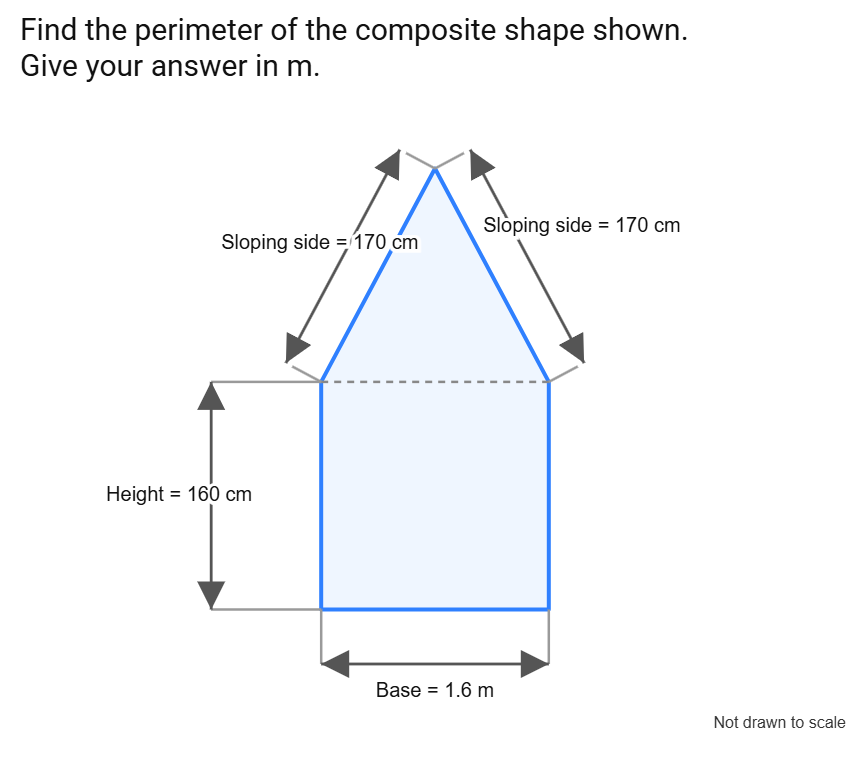
Topic: Area and Perimeter of Compound shapes


-
Area = m²
⌨️ Enter your answer in the field provided.
CorrectIncorrectHint
💡 Composite shapes: split the shape into simpler ones, work out the area of each part, and then add the areas together.
For area, look for rectangles, triangles, or other simple shapes you already know how to work with.
For perimeter, add up all the lengths going right around the outside of the shape.
Be careful not to include any lines inside the shape when finding the perimeter.
Some side lengths might be missing, so you may need to work them out first from the information in the diagram before finding the area or perimeter.
-
-
Question 2 of 50
2. Question
Topic: Area and Perimeter of Compound shapes

-
Area = m²
⌨️ Enter your answer in the field provided.
CorrectIncorrectHint
💡 Composite shapes: split the shape into simpler ones, work out the area of each part, and then add the areas together.
For area, look for rectangles, triangles, or other simple shapes you already know how to work with.
For perimeter, add up all the lengths going right around the outside of the shape.
Be careful not to include any lines inside the shape when finding the perimeter.
Some side lengths might be missing, so you may need to work them out first from the information in the diagram before finding the area or perimeter.
-
-
Question 3 of 50
3. Question
Topic: Area and Perimeter of Compound shapes

-
Perimeter = m
⌨️ Enter your answer in the field provided.
CorrectIncorrectHint
💡 Composite shapes: split the shape into simpler ones, work out the area of each part, and then add the areas together.
For area, look for rectangles, triangles, or other simple shapes you already know how to work with.
For perimeter, add up all the lengths going right around the outside of the shape.
Be careful not to include any lines inside the shape when finding the perimeter.
Some side lengths might be missing, so you may need to work them out first from the information in the diagram before finding the area or perimeter.
-
-
Question 4 of 50
4. Question
Topic: Area and Perimeter of Compound shapes

-
Perimeter = m
⌨️ Enter your answer in the field provided.
CorrectIncorrectHint
💡 Composite shapes: split the shape into simpler ones, work out the area of each part, and then add the areas together.
For area, look for rectangles, triangles, or other simple shapes you already know how to work with.
For perimeter, add up all the lengths going right around the outside of the shape.
Be careful not to include any lines inside the shape when finding the perimeter.
Some side lengths might be missing, so you may need to work them out first from the information in the diagram before finding the area or perimeter.
-
-
Question 5 of 50
5. Question
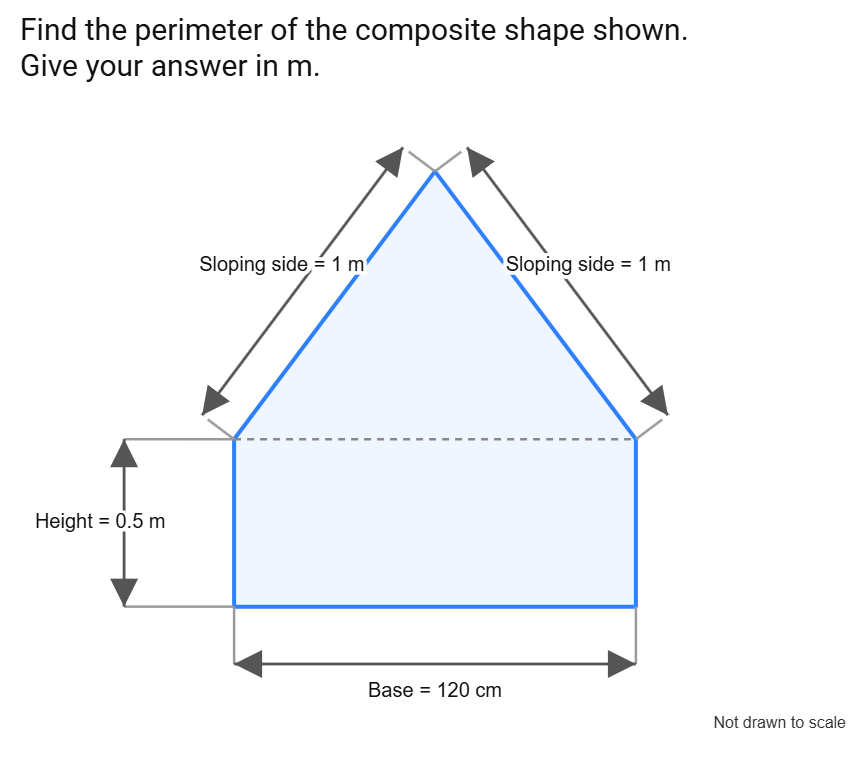
Topic: Area and Perimeter of Compound shapes
-
Perimeter = m
⌨️ Enter your answer in the field provided.
CorrectIncorrectHint
💡 Composite shapes: split the shape into simpler ones, work out the area of each part, and then add the areas together.
For area, look for rectangles, triangles, or other simple shapes you already know how to work with.
For perimeter, add up all the lengths going right around the outside of the shape.
Be careful not to include any lines inside the shape when finding the perimeter.
Some side lengths might be missing, so you may need to work them out first from the information in the diagram before finding the area or perimeter.
-
-
Question 6 of 50
6. Question
Topic: Area and Perimeter of Compound shapes

-
Perimeter = m
⌨️ Enter your answer in the field provided.
CorrectIncorrectHint
💡 Composite shapes: split the shape into simpler ones, work out the area of each part, and then add the areas together.
For area, look for rectangles, triangles, or other simple shapes you already know how to work with.
For perimeter, add up all the lengths going right around the outside of the shape.
Be careful not to include any lines inside the shape when finding the perimeter.
Some side lengths might be missing, so you may need to work them out first from the information in the diagram before finding the area or perimeter.
-
-
Question 7 of 50
7. Question
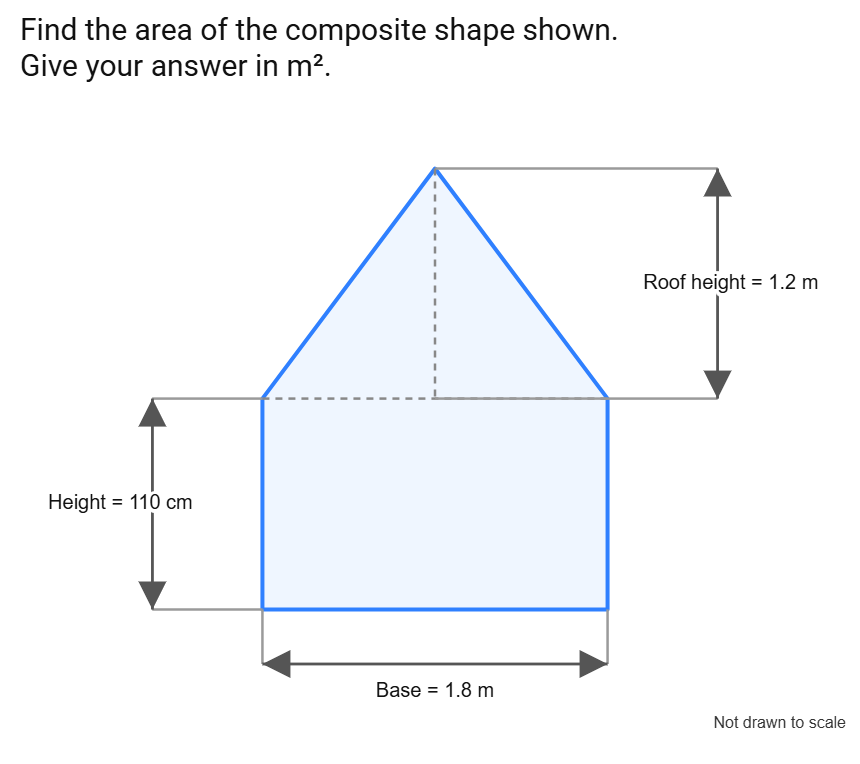
Topic: Area and Perimeter of Compound shapes
-
Area = m²
⌨️ Enter your answer in the field provided.
CorrectIncorrectHint
💡 Composite shapes: split the shape into simpler ones, work out the area of each part, and then add the areas together.
For area, look for rectangles, triangles, or other simple shapes you already know how to work with.
For perimeter, add up all the lengths going right around the outside of the shape.
Be careful not to include any lines inside the shape when finding the perimeter.
Some side lengths might be missing, so you may need to work them out first from the information in the diagram before finding the area or perimeter.
-
-
Question 8 of 50
8. Question
Topic: Area and Perimeter of Compound shapes

-
Area = m²
⌨️ Enter your answer in the field provided.
CorrectIncorrectHint
💡 Composite shapes: split the shape into simpler ones, work out the area of each part, and then add the areas together.
For area, look for rectangles, triangles, or other simple shapes you already know how to work with.
For perimeter, add up all the lengths going right around the outside of the shape.
Be careful not to include any lines inside the shape when finding the perimeter.
Some side lengths might be missing, so you may need to work them out first from the information in the diagram before finding the area or perimeter.
-
-
Question 9 of 50
9. Question
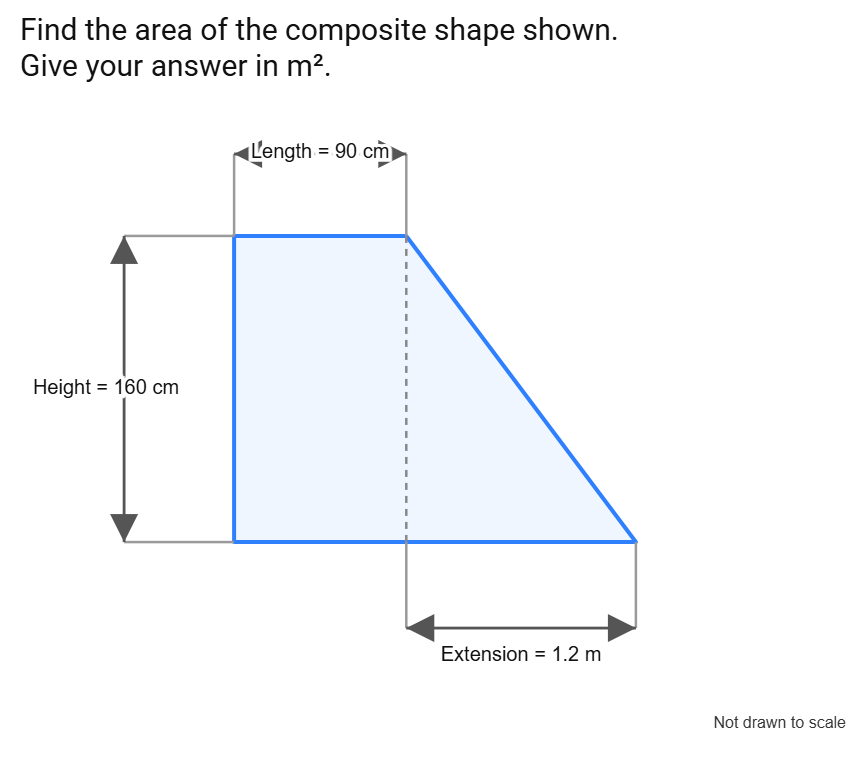
Topic: Area and Perimeter of Compound shapes
-
Area = m²
⌨️ Enter your answer in the field provided.
CorrectIncorrectHint
💡 Composite shapes: split the shape into simpler ones, work out the area of each part, and then add the areas together.
For area, look for rectangles, triangles, or other simple shapes you already know how to work with.
For perimeter, add up all the lengths going right around the outside of the shape.
Be careful not to include any lines inside the shape when finding the perimeter.
Some side lengths might be missing, so you may need to work them out first from the information in the diagram before finding the area or perimeter.
-
-
Question 10 of 50
10. Question
Topic: Area and Perimeter of Compound shapes

-
Area = m²
⌨️ Enter your answer in the field provided.
CorrectIncorrectHint
💡 Composite shapes: split the shape into simpler ones, work out the area of each part, and then add the areas together.
For area, look for rectangles, triangles, or other simple shapes you already know how to work with.
For perimeter, add up all the lengths going right around the outside of the shape.
Be careful not to include any lines inside the shape when finding the perimeter.
Some side lengths might be missing, so you may need to work them out first from the information in the diagram before finding the area or perimeter.
-
-
Question 11 of 50
11. Question
Topic: Area and Perimeter of Compound shapes

-
Perimeter = m
⌨️ Enter your answer in the field provided.
CorrectIncorrectHint
💡 Composite shapes: split the shape into simpler ones, work out the area of each part, and then add the areas together.
For area, look for rectangles, triangles, or other simple shapes you already know how to work with.
For perimeter, add up all the lengths going right around the outside of the shape.
Be careful not to include any lines inside the shape when finding the perimeter.
Some side lengths might be missing, so you may need to work them out first from the information in the diagram before finding the area or perimeter.
-
-
Question 12 of 50
12. Question
Topic: Area and Perimeter of Compound shapes

-
Area = m²
⌨️ Enter your answer in the field provided.
CorrectIncorrectHint
💡 Composite shapes: split the shape into simpler ones, work out the area of each part, and then add the areas together.
For area, look for rectangles, triangles, or other simple shapes you already know how to work with.
For perimeter, add up all the lengths going right around the outside of the shape.
Be careful not to include any lines inside the shape when finding the perimeter.
Some side lengths might be missing, so you may need to work them out first from the information in the diagram before finding the area or perimeter.
-
-
Question 13 of 50
13. Question
Topic: Area and Perimeter of Compound shapes

-
Area = m²
⌨️ Enter your answer in the field provided.
CorrectIncorrectHint
💡 Composite shapes: split the shape into simpler ones, work out the area of each part, and then add the areas together.
For area, look for rectangles, triangles, or other simple shapes you already know how to work with.
For perimeter, add up all the lengths going right around the outside of the shape.
Be careful not to include any lines inside the shape when finding the perimeter.
Some side lengths might be missing, so you may need to work them out first from the information in the diagram before finding the area or perimeter.
-
-
Question 14 of 50
14. Question
Topic: Area and Perimeter of Compound shapes

-
Area = m²
⌨️ Enter your answer in the field provided.
CorrectIncorrectHint
💡 Composite shapes: split the shape into simpler ones, work out the area of each part, and then add the areas together.
For area, look for rectangles, triangles, or other simple shapes you already know how to work with.
For perimeter, add up all the lengths going right around the outside of the shape.
Be careful not to include any lines inside the shape when finding the perimeter.
Some side lengths might be missing, so you may need to work them out first from the information in the diagram before finding the area or perimeter.
-
-
Question 15 of 50
15. Question
Topic: Area and Perimeter of Compound shapes

-
Perimeter = m
⌨️ Enter your answer in the field provided.
CorrectIncorrectHint
💡 Composite shapes: split the shape into simpler ones, work out the area of each part, and then add the areas together.
For area, look for rectangles, triangles, or other simple shapes you already know how to work with.
For perimeter, add up all the lengths going right around the outside of the shape.
Be careful not to include any lines inside the shape when finding the perimeter.
Some side lengths might be missing, so you may need to work them out first from the information in the diagram before finding the area or perimeter.
-
-
Question 16 of 50
16. Question
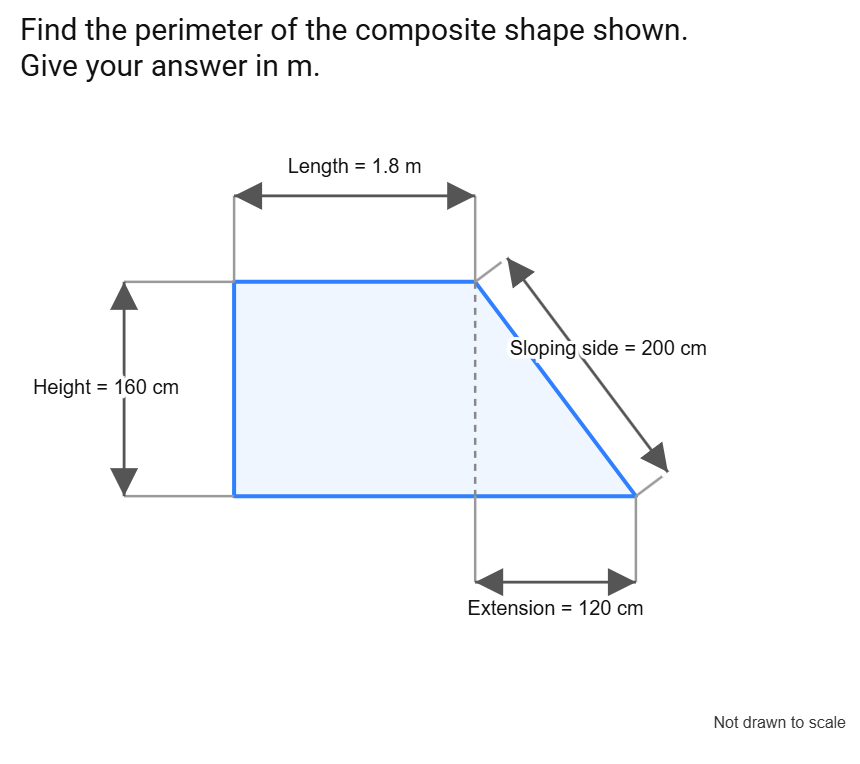
Topic: Area and Perimeter of Compound shapes
-
Perimeter = m
⌨️ Enter your answer in the field provided.
CorrectIncorrectHint
💡 Composite shapes: split the shape into simpler ones, work out the area of each part, and then add the areas together.
For area, look for rectangles, triangles, or other simple shapes you already know how to work with.
For perimeter, add up all the lengths going right around the outside of the shape.
Be careful not to include any lines inside the shape when finding the perimeter.
Some side lengths might be missing, so you may need to work them out first from the information in the diagram before finding the area or perimeter.
-
-
Question 17 of 50
17. Question
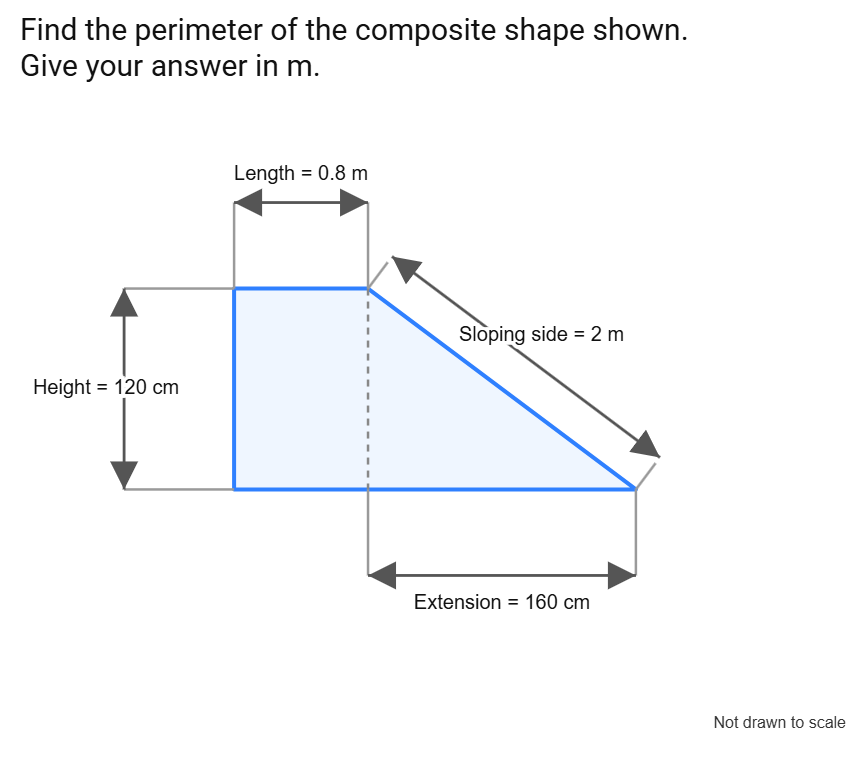
Topic: Area and Perimeter of Compound shapes
-
Perimeter = m
⌨️ Enter your answer in the field provided.
CorrectIncorrectHint
💡 Composite shapes: split the shape into simpler ones, work out the area of each part, and then add the areas together.
For area, look for rectangles, triangles, or other simple shapes you already know how to work with.
For perimeter, add up all the lengths going right around the outside of the shape.
Be careful not to include any lines inside the shape when finding the perimeter.
Some side lengths might be missing, so you may need to work them out first from the information in the diagram before finding the area or perimeter.
-
-
Question 18 of 50
18. Question
Topic: Area and Perimeter of Compound shapes

-
Area = m²
⌨️ Enter your answer in the field provided.
CorrectIncorrectHint
💡 Composite shapes: split the shape into simpler ones, work out the area of each part, and then add the areas together.
For area, look for rectangles, triangles, or other simple shapes you already know how to work with.
For perimeter, add up all the lengths going right around the outside of the shape.
Be careful not to include any lines inside the shape when finding the perimeter.
Some side lengths might be missing, so you may need to work them out first from the information in the diagram before finding the area or perimeter.
-
-
Question 19 of 50
19. Question
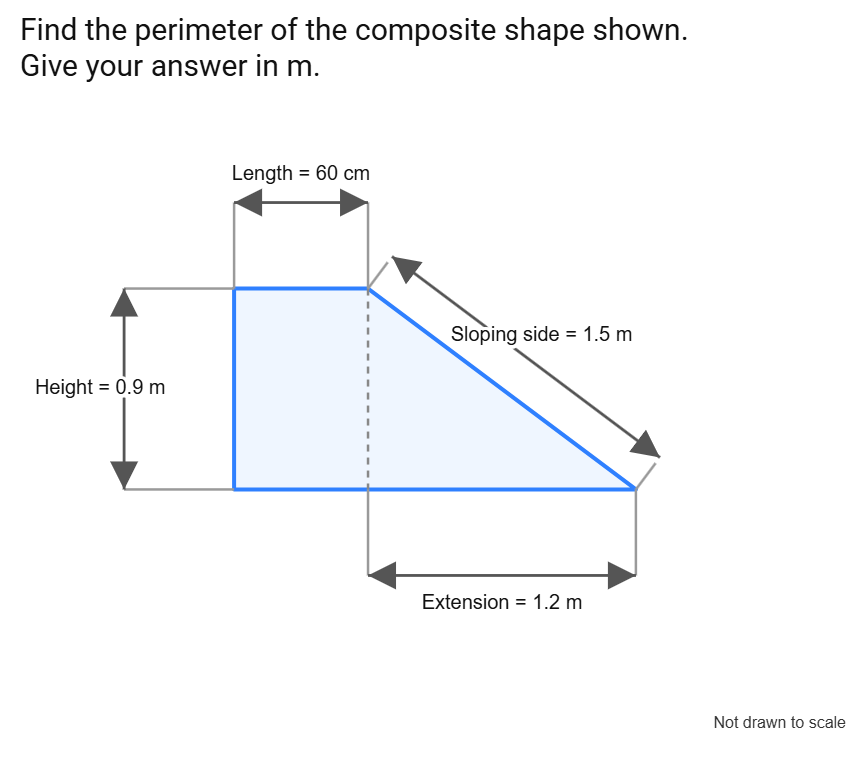
Topic: Area and Perimeter of Compound shapes
-
Perimeter = m
⌨️ Enter your answer in the field provided.
CorrectIncorrectHint
💡 Composite shapes: split the shape into simpler ones, work out the area of each part, and then add the areas together.
For area, look for rectangles, triangles, or other simple shapes you already know how to work with.
For perimeter, add up all the lengths going right around the outside of the shape.
Be careful not to include any lines inside the shape when finding the perimeter.
Some side lengths might be missing, so you may need to work them out first from the information in the diagram before finding the area or perimeter.
-
-
Question 20 of 50
20. Question
Topic: Area and Perimeter of Compound shapes

-
Perimeter = m
⌨️ Enter your answer in the field provided.
CorrectIncorrectHint
💡 Composite shapes: split the shape into simpler ones, work out the area of each part, and then add the areas together.
For area, look for rectangles, triangles, or other simple shapes you already know how to work with.
For perimeter, add up all the lengths going right around the outside of the shape.
Be careful not to include any lines inside the shape when finding the perimeter.
Some side lengths might be missing, so you may need to work them out first from the information in the diagram before finding the area or perimeter.
-
-
Question 21 of 50
21. Question
Topic: Area and Perimeter of Compound shapes

-
Perimeter = m
⌨️ Enter your answer in the field provided.
CorrectIncorrectHint
💡 Composite shapes: split the shape into simpler ones, work out the area of each part, and then add the areas together.
For area, look for rectangles, triangles, or other simple shapes you already know how to work with.
For perimeter, add up all the lengths going right around the outside of the shape.
Be careful not to include any lines inside the shape when finding the perimeter.
Some side lengths might be missing, so you may need to work them out first from the information in the diagram before finding the area or perimeter.
-
-
Question 22 of 50
22. Question
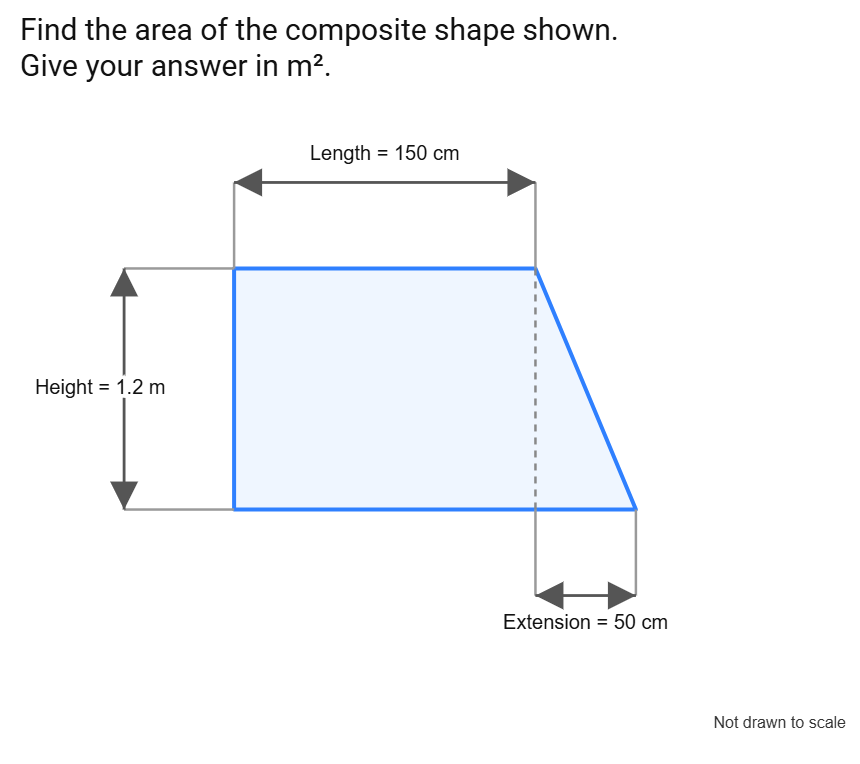
Topic: Area and Perimeter of Compound shapes
-
Area = m²
⌨️ Enter your answer in the field provided.
CorrectIncorrectHint
💡 Composite shapes: split the shape into simpler ones, work out the area of each part, and then add the areas together.
For area, look for rectangles, triangles, or other simple shapes you already know how to work with.
For perimeter, add up all the lengths going right around the outside of the shape.
Be careful not to include any lines inside the shape when finding the perimeter.
Some side lengths might be missing, so you may need to work them out first from the information in the diagram before finding the area or perimeter.
-
-
Question 23 of 50
23. Question
Topic: Area and Perimeter of Compound shapes

-
Area = m²
⌨️ Enter your answer in the field provided.
CorrectIncorrectHint
💡 Composite shapes: split the shape into simpler ones, work out the area of each part, and then add the areas together.
For area, look for rectangles, triangles, or other simple shapes you already know how to work with.
For perimeter, add up all the lengths going right around the outside of the shape.
Be careful not to include any lines inside the shape when finding the perimeter.
Some side lengths might be missing, so you may need to work them out first from the information in the diagram before finding the area or perimeter.
-
-
Question 24 of 50
24. Question
Topic: Area and Perimeter of Compound shapes

-
Perimeter = m
⌨️ Enter your answer in the field provided.
CorrectIncorrectHint
💡 Composite shapes: split the shape into simpler ones, work out the area of each part, and then add the areas together.
For area, look for rectangles, triangles, or other simple shapes you already know how to work with.
For perimeter, add up all the lengths going right around the outside of the shape.
Be careful not to include any lines inside the shape when finding the perimeter.
Some side lengths might be missing, so you may need to work them out first from the information in the diagram before finding the area or perimeter.
-
-
Question 25 of 50
25. Question
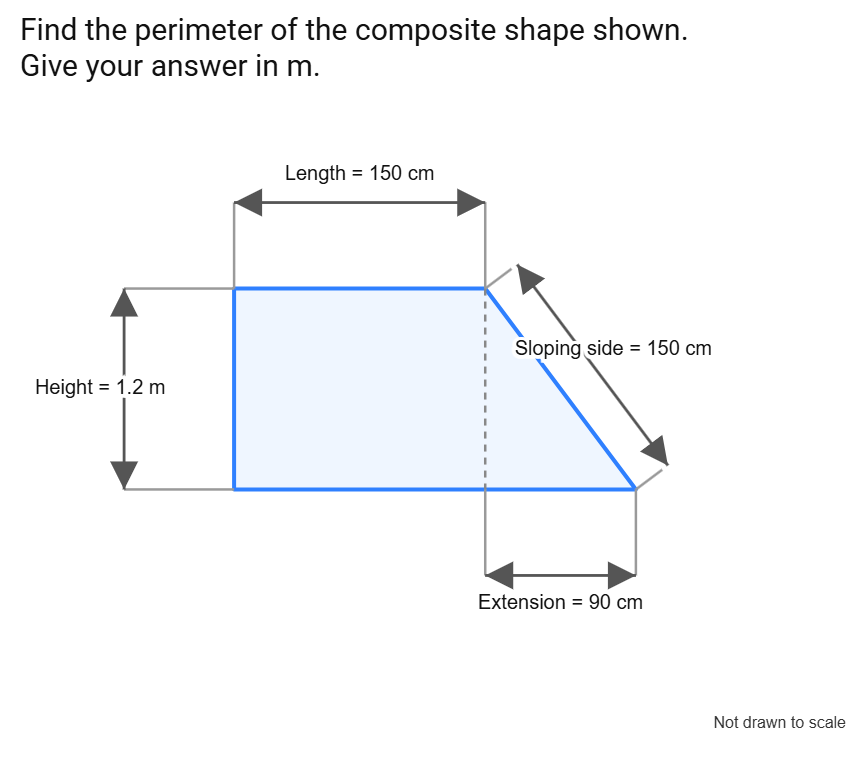
Topic: Area and Perimeter of Compound shapes
-
Perimeter = m
⌨️ Enter your answer in the field provided.
CorrectIncorrectHint
💡 Composite shapes: split the shape into simpler ones, work out the area of each part, and then add the areas together.
For area, look for rectangles, triangles, or other simple shapes you already know how to work with.
For perimeter, add up all the lengths going right around the outside of the shape.
Be careful not to include any lines inside the shape when finding the perimeter.
Some side lengths might be missing, so you may need to work them out first from the information in the diagram before finding the area or perimeter.
-
-
Question 26 of 50
26. Question
Topic: Area and Perimeter of Compound shapes
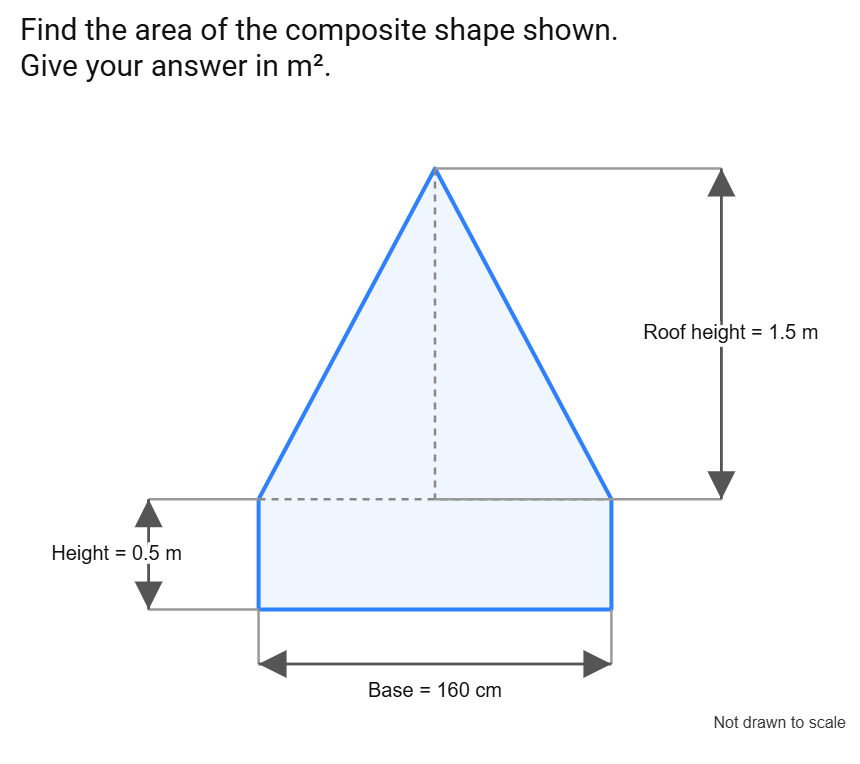
-
Area = m²
⌨️ Enter your answer in the field provided.
CorrectIncorrectHint
💡 Composite shapes: split the shape into simpler ones, work out the area of each part, and then add the areas together.
For area, look for rectangles, triangles, or other simple shapes you already know how to work with.
For perimeter, add up all the lengths going right around the outside of the shape.
Be careful not to include any lines inside the shape when finding the perimeter.
Some side lengths might be missing, so you may need to work them out first from the information in the diagram before finding the area or perimeter.
-
-
Question 27 of 50
27. Question
Topic: Area and Perimeter of Compound shapes

-
Perimeter = m
⌨️ Enter your answer in the field provided.
CorrectIncorrectHint
💡 Composite shapes: split the shape into simpler ones, work out the area of each part, and then add the areas together.
For area, look for rectangles, triangles, or other simple shapes you already know how to work with.
For perimeter, add up all the lengths going right around the outside of the shape.
Be careful not to include any lines inside the shape when finding the perimeter.
Some side lengths might be missing, so you may need to work them out first from the information in the diagram before finding the area or perimeter.
-
-
Question 28 of 50
28. Question
Topic: Area and Perimeter of Compound shapes

-
Area = m²
⌨️ Enter your answer in the field provided.
CorrectIncorrectHint
💡 Composite shapes: split the shape into simpler ones, work out the area of each part, and then add the areas together.
For area, look for rectangles, triangles, or other simple shapes you already know how to work with.
For perimeter, add up all the lengths going right around the outside of the shape.
Be careful not to include any lines inside the shape when finding the perimeter.
Some side lengths might be missing, so you may need to work them out first from the information in the diagram before finding the area or perimeter.
-
-
Question 29 of 50
29. Question
Topic: Area and Perimeter of Compound shapes

-
Area = m²
⌨️ Enter your answer in the field provided.
CorrectIncorrectHint
💡 Composite shapes: split the shape into simpler ones, work out the area of each part, and then add the areas together.
For area, look for rectangles, triangles, or other simple shapes you already know how to work with.
For perimeter, add up all the lengths going right around the outside of the shape.
Be careful not to include any lines inside the shape when finding the perimeter.
Some side lengths might be missing, so you may need to work them out first from the information in the diagram before finding the area or perimeter.
-
-
Question 30 of 50
30. Question
Topic: Area and Perimeter of Compound shapes

-
Perimeter = m
⌨️ Enter your answer in the field provided.
CorrectIncorrectHint
💡 Composite shapes: split the shape into simpler ones, work out the area of each part, and then add the areas together.
For area, look for rectangles, triangles, or other simple shapes you already know how to work with.
For perimeter, add up all the lengths going right around the outside of the shape.
Be careful not to include any lines inside the shape when finding the perimeter.
Some side lengths might be missing, so you may need to work them out first from the information in the diagram before finding the area or perimeter.
-
-
Question 31 of 50
31. Question
Topic: Area and Perimeter of Compound shapes
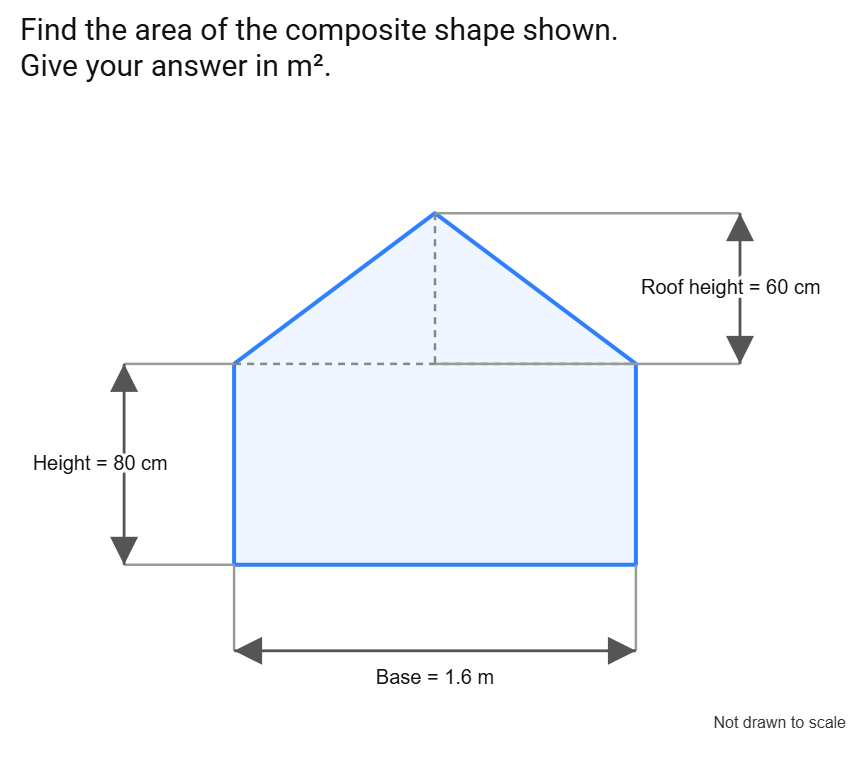
-
Area = m²
⌨️ Enter your answer in the field provided.
CorrectIncorrectHint
💡 Composite shapes: split the shape into simpler ones, work out the area of each part, and then add the areas together.
For area, look for rectangles, triangles, or other simple shapes you already know how to work with.
For perimeter, add up all the lengths going right around the outside of the shape.
Be careful not to include any lines inside the shape when finding the perimeter.
Some side lengths might be missing, so you may need to work them out first from the information in the diagram before finding the area or perimeter.
-
-
Question 32 of 50
32. Question
Topic: Area and Perimeter of Compound shapes

-
Perimeter = m
⌨️ Enter your answer in the field provided.
CorrectIncorrectHint
💡 Composite shapes: split the shape into simpler ones, work out the area of each part, and then add the areas together.
For area, look for rectangles, triangles, or other simple shapes you already know how to work with.
For perimeter, add up all the lengths going right around the outside of the shape.
Be careful not to include any lines inside the shape when finding the perimeter.
Some side lengths might be missing, so you may need to work them out first from the information in the diagram before finding the area or perimeter.
-
-
Question 33 of 50
33. Question
Topic: Area and Perimeter of Compound shapes

-
Perimeter = m
⌨️ Enter your answer in the field provided.
CorrectIncorrectHint
💡 Composite shapes: split the shape into simpler ones, work out the area of each part, and then add the areas together.
For area, look for rectangles, triangles, or other simple shapes you already know how to work with.
For perimeter, add up all the lengths going right around the outside of the shape.
Be careful not to include any lines inside the shape when finding the perimeter.
Some side lengths might be missing, so you may need to work them out first from the information in the diagram before finding the area or perimeter.
-
-
Question 34 of 50
34. Question
Topic: Area and Perimeter of Compound shapes
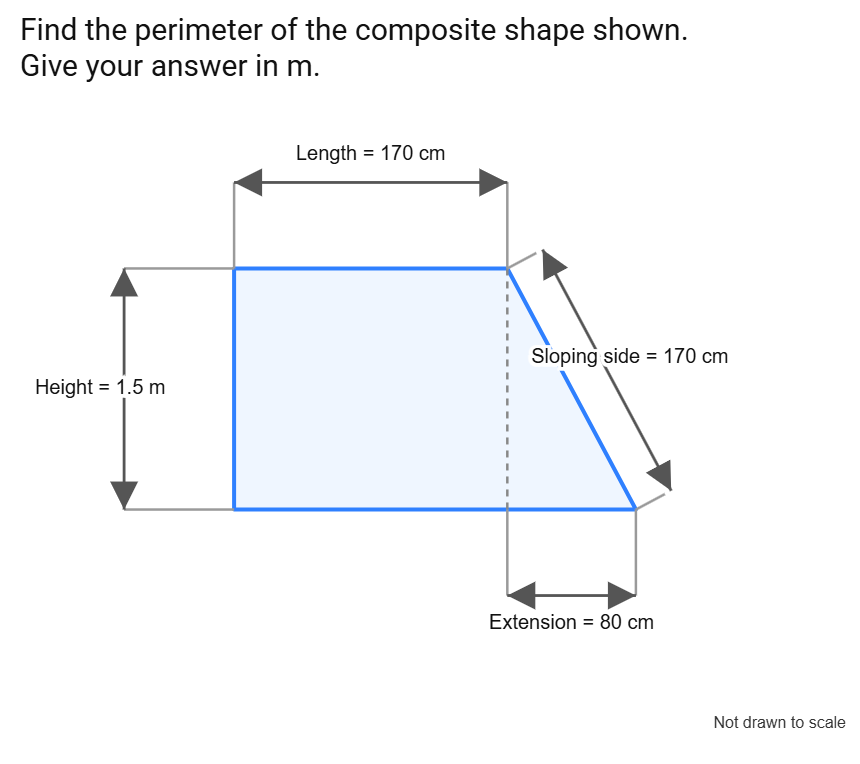
-
Perimeter = m
⌨️ Enter your answer in the field provided.
CorrectIncorrectHint
💡 Composite shapes: split the shape into simpler ones, work out the area of each part, and then add the areas together.
For area, look for rectangles, triangles, or other simple shapes you already know how to work with.
For perimeter, add up all the lengths going right around the outside of the shape.
Be careful not to include any lines inside the shape when finding the perimeter.
Some side lengths might be missing, so you may need to work them out first from the information in the diagram before finding the area or perimeter.
-
-
Question 35 of 50
35. Question
Topic: Area and Perimeter of Compound shapes
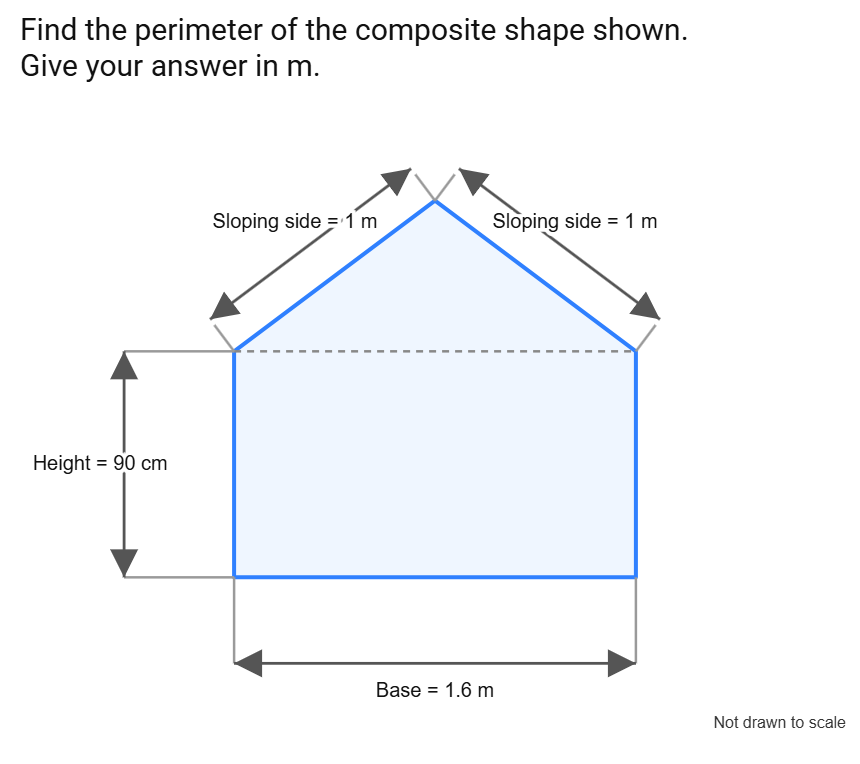
-
Perimeter = m
⌨️ Enter your answer in the field provided.
CorrectIncorrectHint
💡 Composite shapes: split the shape into simpler ones, work out the area of each part, and then add the areas together.
For area, look for rectangles, triangles, or other simple shapes you already know how to work with.
For perimeter, add up all the lengths going right around the outside of the shape.
Be careful not to include any lines inside the shape when finding the perimeter.
Some side lengths might be missing, so you may need to work them out first from the information in the diagram before finding the area or perimeter.
-
-
Question 36 of 50
36. Question
Topic: Area and Perimeter of Compound shapes

-
Area = m²
⌨️ Enter your answer in the field provided.
CorrectIncorrectHint
💡 Composite shapes: split the shape into simpler ones, work out the area of each part, and then add the areas together.
For area, look for rectangles, triangles, or other simple shapes you already know how to work with.
For perimeter, add up all the lengths going right around the outside of the shape.
Be careful not to include any lines inside the shape when finding the perimeter.
Some side lengths might be missing, so you may need to work them out first from the information in the diagram before finding the area or perimeter.
-
-
Question 37 of 50
37. Question
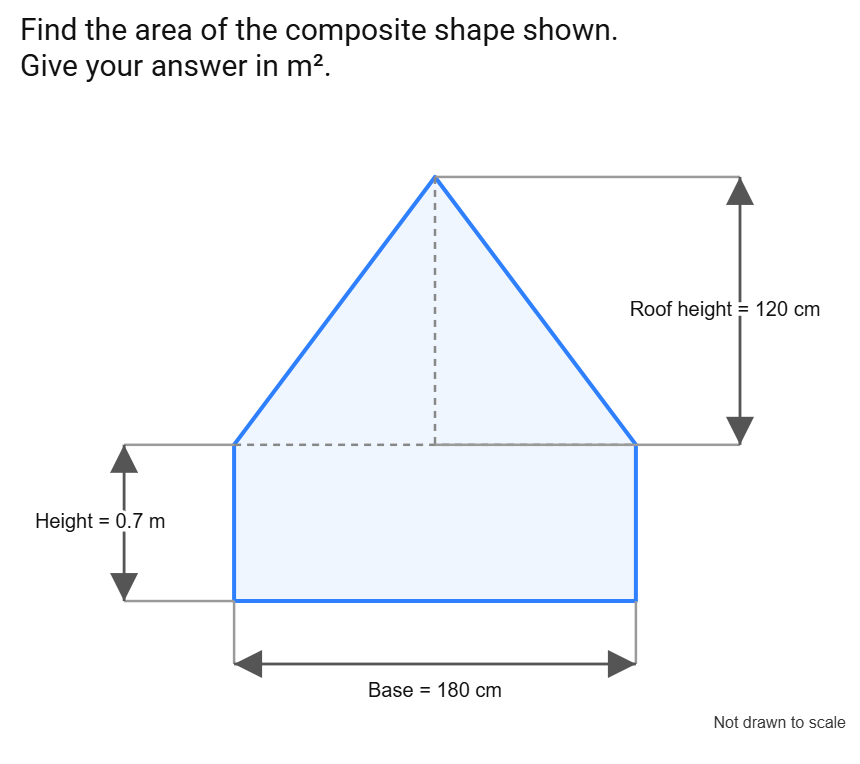
Topic: Area and Perimeter of Compound shapes
-
Area = m²
⌨️ Enter your answer in the field provided.
CorrectIncorrectHint
💡 Composite shapes: split the shape into simpler ones, work out the area of each part, and then add the areas together.
For area, look for rectangles, triangles, or other simple shapes you already know how to work with.
For perimeter, add up all the lengths going right around the outside of the shape.
Be careful not to include any lines inside the shape when finding the perimeter.
Some side lengths might be missing, so you may need to work them out first from the information in the diagram before finding the area or perimeter.
-
-
Question 38 of 50
38. Question
Topic: Area and Perimeter of Compound shapes

-
Perimeter = m
⌨️ Enter your answer in the field provided.
CorrectIncorrectHint
💡 Composite shapes: split the shape into simpler ones, work out the area of each part, and then add the areas together.
For area, look for rectangles, triangles, or other simple shapes you already know how to work with.
For perimeter, add up all the lengths going right around the outside of the shape.
Be careful not to include any lines inside the shape when finding the perimeter.
Some side lengths might be missing, so you may need to work them out first from the information in the diagram before finding the area or perimeter.
-
-
Question 39 of 50
39. Question
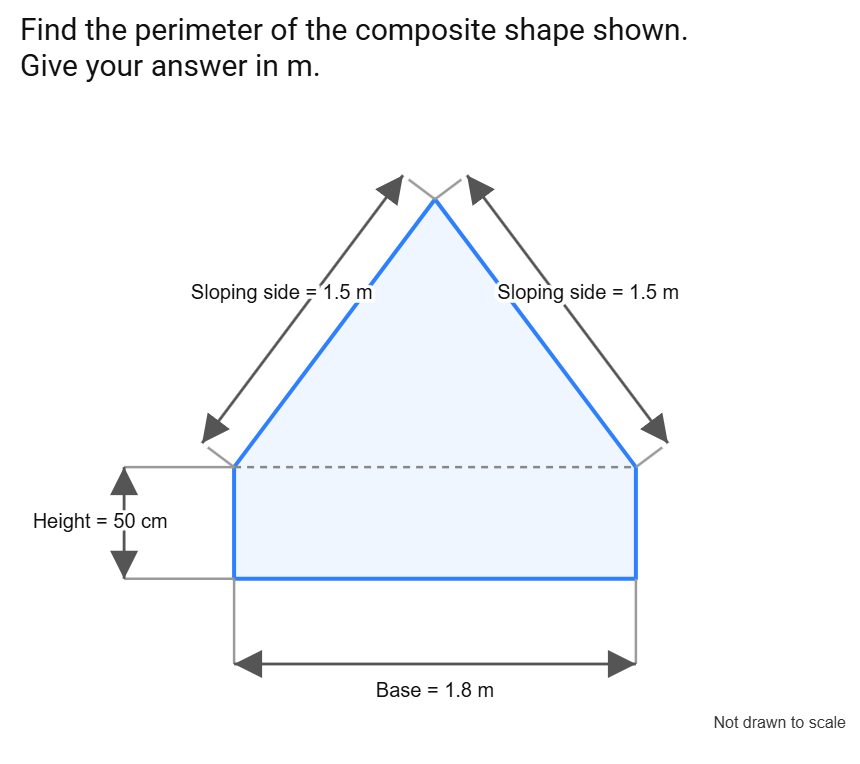
Topic: Area and Perimeter of Compound shapes
-
Perimeter = m
⌨️ Enter your answer in the field provided.
CorrectIncorrectHint
💡 Composite shapes: split the shape into simpler ones, work out the area of each part, and then add the areas together.
For area, look for rectangles, triangles, or other simple shapes you already know how to work with.
For perimeter, add up all the lengths going right around the outside of the shape.
Be careful not to include any lines inside the shape when finding the perimeter.
Some side lengths might be missing, so you may need to work them out first from the information in the diagram before finding the area or perimeter.
-
-
Question 40 of 50
40. Question
Topic: Area and Perimeter of Compound shapes

-
Area = m²
⌨️ Enter your answer in the field provided.
CorrectIncorrectHint
💡 Composite shapes: split the shape into simpler ones, work out the area of each part, and then add the areas together.
For area, look for rectangles, triangles, or other simple shapes you already know how to work with.
For perimeter, add up all the lengths going right around the outside of the shape.
Be careful not to include any lines inside the shape when finding the perimeter.
Some side lengths might be missing, so you may need to work them out first from the information in the diagram before finding the area or perimeter.
-
-
Question 41 of 50
41. Question
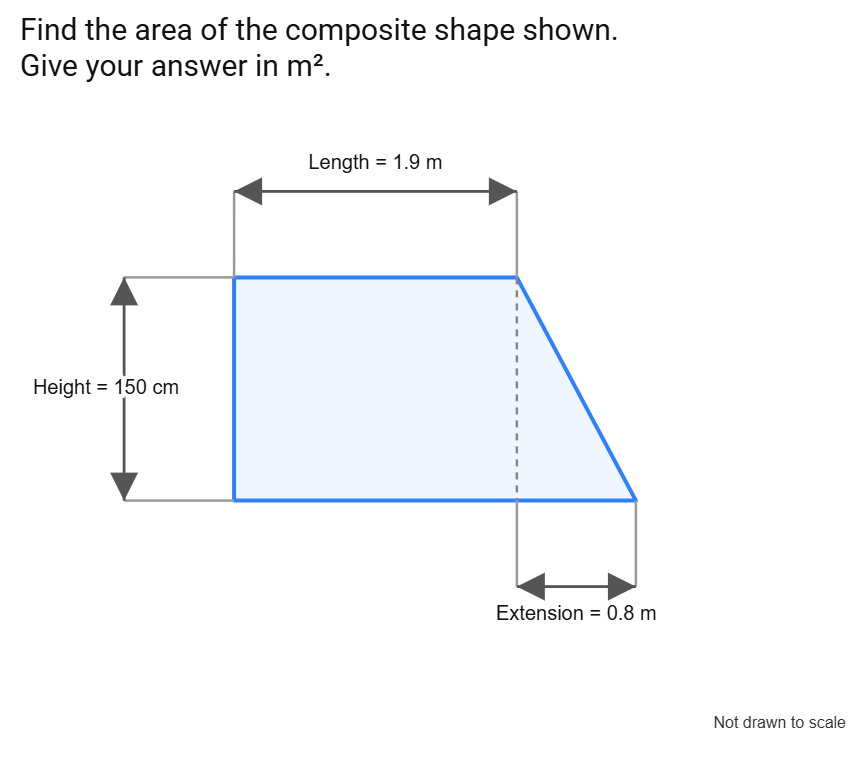
Topic: Area and Perimeter of Compound shapes
-
Area = m²
⌨️ Enter your answer in the field provided.
CorrectIncorrectHint
💡 Composite shapes: split the shape into simpler ones, work out the area of each part, and then add the areas together.
For area, look for rectangles, triangles, or other simple shapes you already know how to work with.
For perimeter, add up all the lengths going right around the outside of the shape.
Be careful not to include any lines inside the shape when finding the perimeter.
Some side lengths might be missing, so you may need to work them out first from the information in the diagram before finding the area or perimeter.
-
-
Question 42 of 50
42. Question
Topic: Area and Perimeter of Compound shapes

-
Area = m²
⌨️ Enter your answer in the field provided.
CorrectIncorrectHint
💡 Composite shapes: split the shape into simpler ones, work out the area of each part, and then add the areas together.
For area, look for rectangles, triangles, or other simple shapes you already know how to work with.
For perimeter, add up all the lengths going right around the outside of the shape.
Be careful not to include any lines inside the shape when finding the perimeter.
Some side lengths might be missing, so you may need to work them out first from the information in the diagram before finding the area or perimeter.
-
-
Question 43 of 50
43. Question
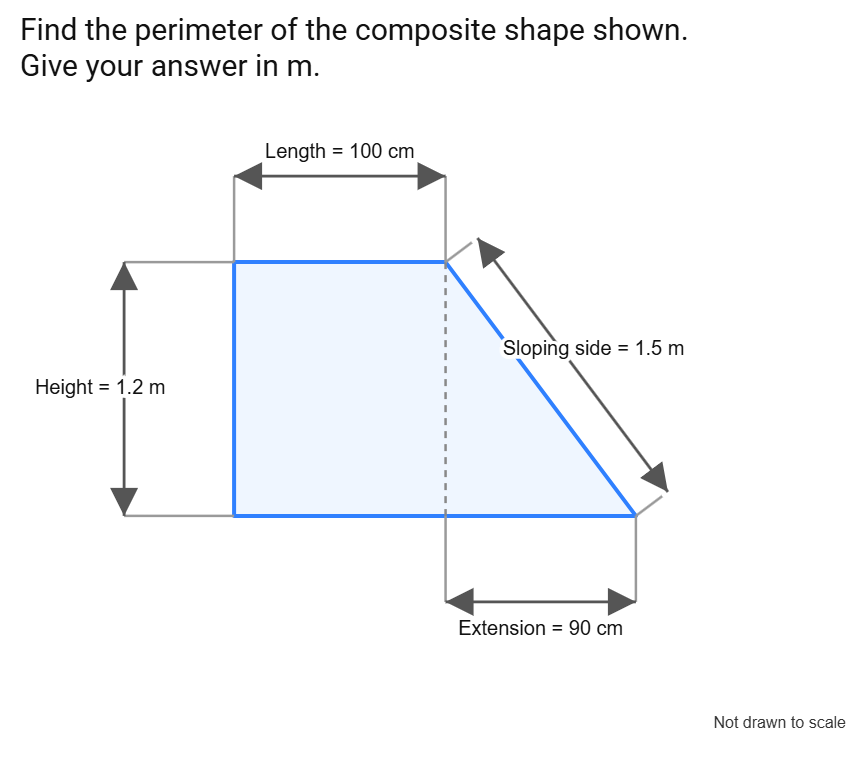
Topic: Area and Perimeter of Compound shapes
-
Perimeter = m
⌨️ Enter your answer in the field provided.
CorrectIncorrectHint
💡 Composite shapes: split the shape into simpler ones, work out the area of each part, and then add the areas together.
For area, look for rectangles, triangles, or other simple shapes you already know how to work with.
For perimeter, add up all the lengths going right around the outside of the shape.
Be careful not to include any lines inside the shape when finding the perimeter.
Some side lengths might be missing, so you may need to work them out first from the information in the diagram before finding the area or perimeter.
-
-
Question 44 of 50
44. Question
Topic: Area and Perimeter of Compound shapes

-
Area = m²
⌨️ Enter your answer in the field provided.
CorrectIncorrectHint
💡 Composite shapes: split the shape into simpler ones, work out the area of each part, and then add the areas together.
For area, look for rectangles, triangles, or other simple shapes you already know how to work with.
For perimeter, add up all the lengths going right around the outside of the shape.
Be careful not to include any lines inside the shape when finding the perimeter.
Some side lengths might be missing, so you may need to work them out first from the information in the diagram before finding the area or perimeter.
-
-
Question 45 of 50
45. Question
Topic: Area and Perimeter of Compound shapes

-
Perimeter = m
⌨️ Enter your answer in the field provided.
CorrectIncorrectHint
💡 Composite shapes: split the shape into simpler ones, work out the area of each part, and then add the areas together.
For area, look for rectangles, triangles, or other simple shapes you already know how to work with.
For perimeter, add up all the lengths going right around the outside of the shape.
Be careful not to include any lines inside the shape when finding the perimeter.
Some side lengths might be missing, so you may need to work them out first from the information in the diagram before finding the area or perimeter.
-
-
Question 46 of 50
46. Question
Topic: Area and Perimeter of Compound shapes

-
Area = m²
⌨️ Enter your answer in the field provided.
CorrectIncorrectHint
💡 Composite shapes: split the shape into simpler ones, work out the area of each part, and then add the areas together.
For area, look for rectangles, triangles, or other simple shapes you already know how to work with.
For perimeter, add up all the lengths going right around the outside of the shape.
Be careful not to include any lines inside the shape when finding the perimeter.
Some side lengths might be missing, so you may need to work them out first from the information in the diagram before finding the area or perimeter.
-
-
Question 47 of 50
47. Question
Topic: Area and Perimeter of Compound shapes
-
Perimeter = m
⌨️ Enter your answer in the field provided.
CorrectIncorrectHint
💡 Composite shapes: split the shape into simpler ones, work out the area of each part, and then add the areas together.
For area, look for rectangles, triangles, or other simple shapes you already know how to work with.
For perimeter, add up all the lengths going right around the outside of the shape.
Be careful not to include any lines inside the shape when finding the perimeter.
Some side lengths might be missing, so you may need to work them out first from the information in the diagram before finding the area or perimeter.
-
-
Question 48 of 50
48. Question
Topic: Area and Perimeter of Compound shapes

-
Area = m²
⌨️ Enter your answer in the field provided.
CorrectIncorrectHint
💡 Composite shapes: split the shape into simpler ones, work out the area of each part, and then add the areas together.
For area, look for rectangles, triangles, or other simple shapes you already know how to work with.
For perimeter, add up all the lengths going right around the outside of the shape.
Be careful not to include any lines inside the shape when finding the perimeter.
Some side lengths might be missing, so you may need to work them out first from the information in the diagram before finding the area or perimeter.
-
-
Question 49 of 50
49. Question
Topic: Area and Perimeter of Compound shapes

-
Perimeter = m
⌨️ Enter your answer in the field provided.
CorrectIncorrectHint
💡 Composite shapes: split the shape into simpler ones, work out the area of each part, and then add the areas together.
For area, look for rectangles, triangles, or other simple shapes you already know how to work with.
For perimeter, add up all the lengths going right around the outside of the shape.
Be careful not to include any lines inside the shape when finding the perimeter.
Some side lengths might be missing, so you may need to work them out first from the information in the diagram before finding the area or perimeter.
-
-
Question 50 of 50
50. Question
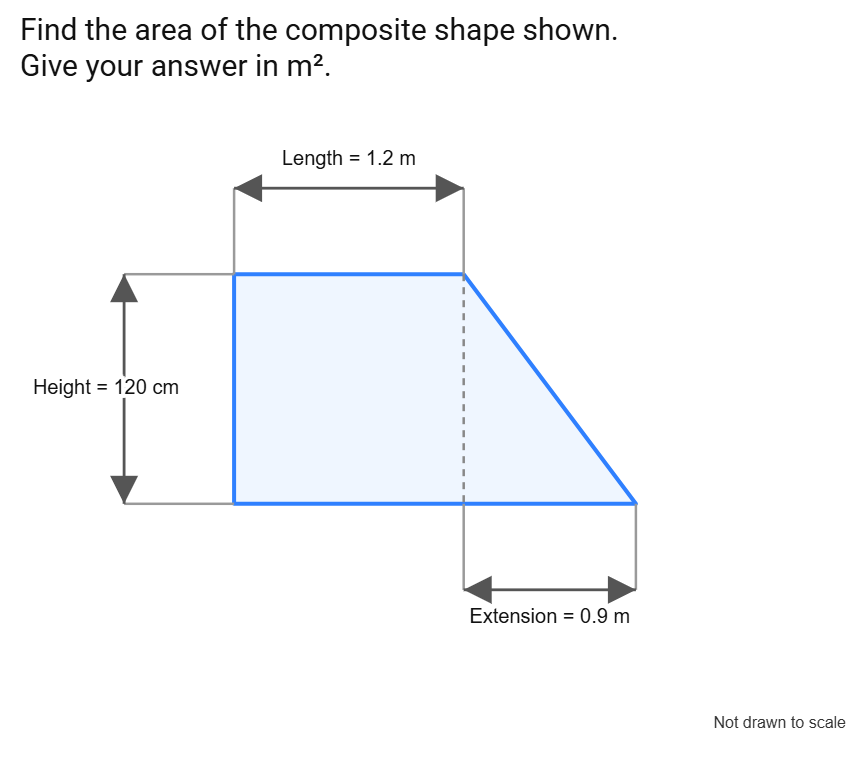
Topic: Area and Perimeter of Compound shapes
-
Area = m²
⌨️ Enter your answer in the field provided.
CorrectIncorrectHint
💡 Composite shapes: split the shape into simpler ones, work out the area of each part, and then add the areas together.
For area, look for rectangles, triangles, or other simple shapes you already know how to work with.
For perimeter, add up all the lengths going right around the outside of the shape.
Be careful not to include any lines inside the shape when finding the perimeter.
Some side lengths might be missing, so you may need to work them out first from the information in the diagram before finding the area or perimeter.
-