
PG.6B, SEC 2, area of trapzm (50)
Quiz Summary
0 of 50 Questions completed
Questions:
Information
You have already completed the quiz before. Hence you can not start it again.
Quiz is loading…
You must sign in or sign up to start the quiz.
You must first complete the following:
Results
Results
0 of 50 Questions answered correctly
Your time:
Time has elapsed
You have reached 0 of 0 point(s), (0)
Earned Point(s): 0 of 0, (0)
0 Essay(s) Pending (Possible Point(s): 0)
Categories
- Not categorized 0%
- 1
- 2
- 3
- 4
- 5
- 6
- 7
- 8
- 9
- 10
- 11
- 12
- 13
- 14
- 15
- 16
- 17
- 18
- 19
- 20
- 21
- 22
- 23
- 24
- 25
- 26
- 27
- 28
- 29
- 30
- 31
- 32
- 33
- 34
- 35
- 36
- 37
- 38
- 39
- 40
- 41
- 42
- 43
- 44
- 45
- 46
- 47
- 48
- 49
- 50
- Current
- Review / Skip
- Answered
- Correct
- Incorrect
-
Question 1 of 50
1. Question
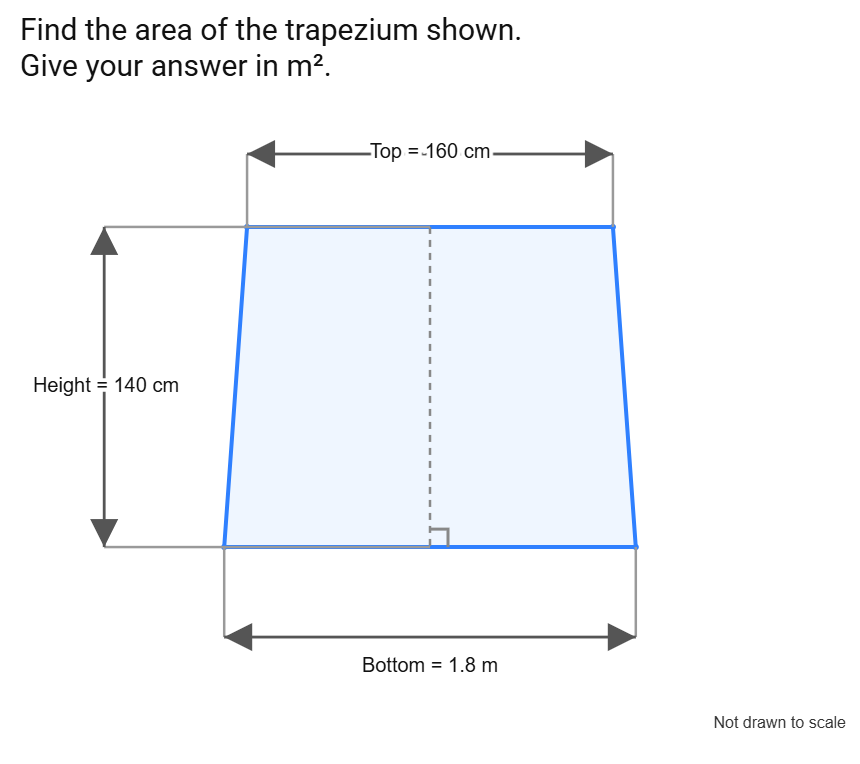
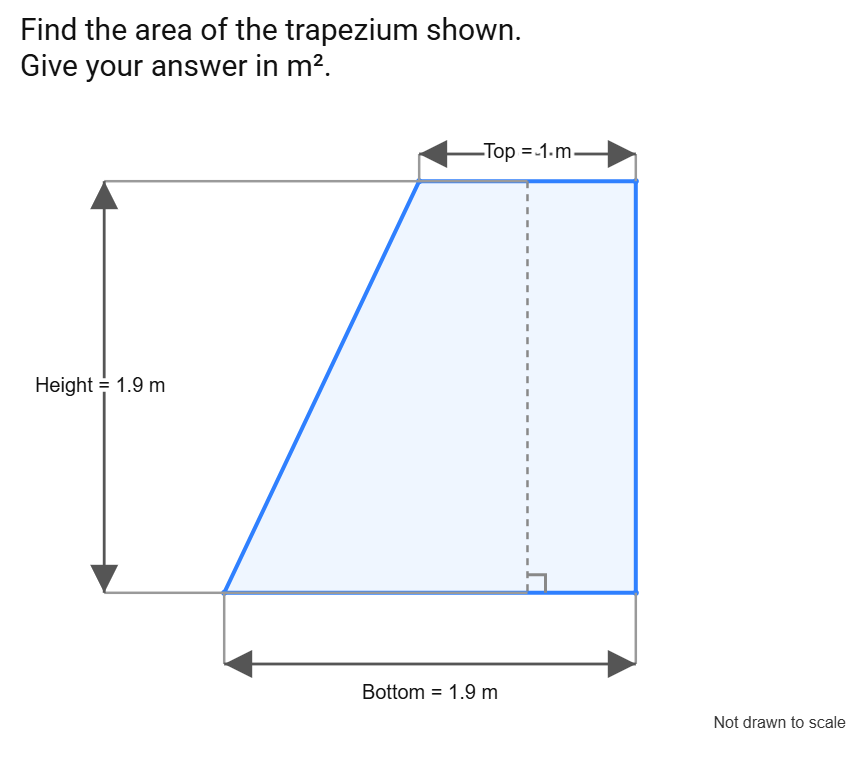
Topic: Area of a Trapezium


-
Area = m²
⌨️ Enter your answer in the field provided.
CorrectIncorrectHint
💡 Area of a trapezium: use Area = ½h(a + b), where h is the perpendicular height and a and b are the two parallel sides.
Find the two parallel sides first and then find the perpendicular height, which is the shortest distance between them at a right angle.
Convert any units first so h, a, and b are all in the same unit.
Substitute the values into Area = ½h(a + b), work out the bracket, and then finish the calculation.
Check that your final answer is in square units, such as cm2 or m2.
-
-
Question 2 of 50
2. Question
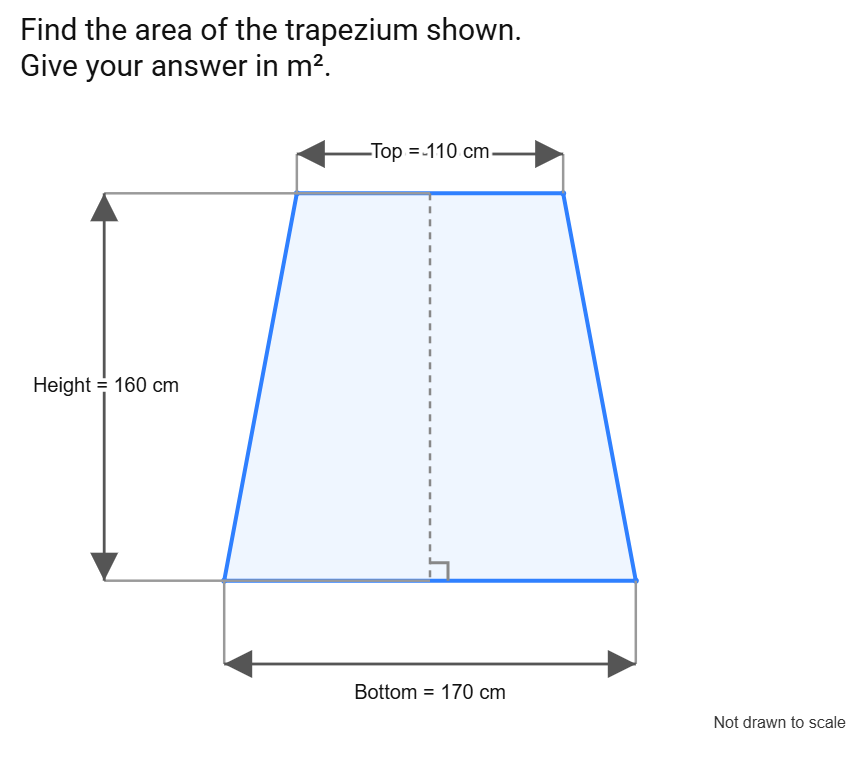
Topic: Area of a Trapezium
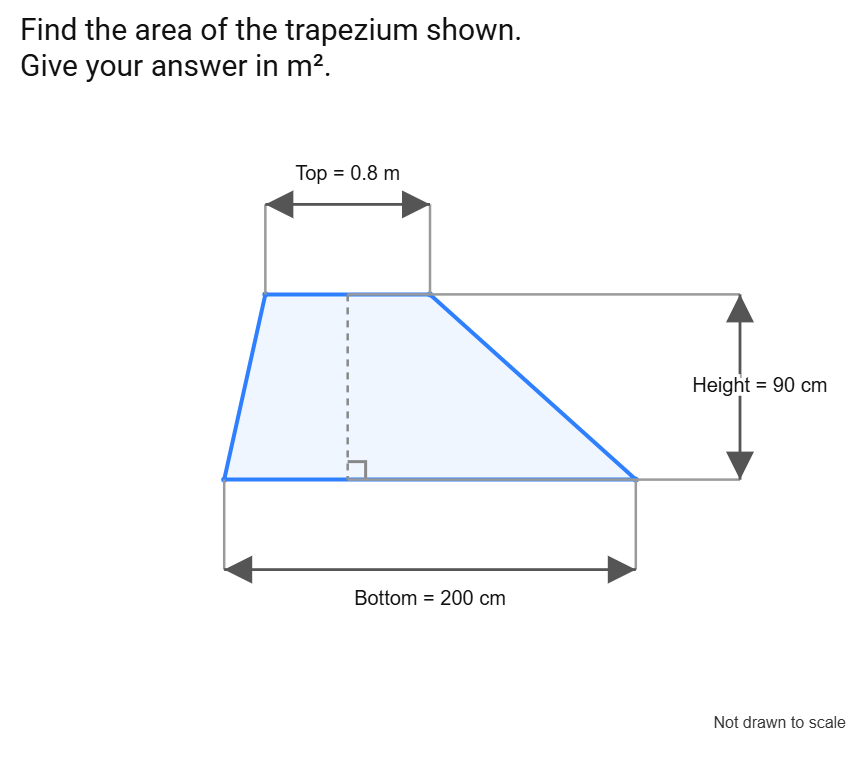
-
Area = m²
⌨️ Enter your answer in the field provided.
CorrectIncorrectHint
💡 Area of a trapezium: use Area = ½h(a + b), where h is the perpendicular height and a and b are the two parallel sides.
Find the two parallel sides first and then find the perpendicular height, which is the shortest distance between them at a right angle.
Convert any units first so h, a, and b are all in the same unit.
Substitute the values into Area = ½h(a + b), work out the bracket, and then finish the calculation.
Check that your final answer is in square units, such as cm2 or m2.
-
-
Question 3 of 50
3. Question
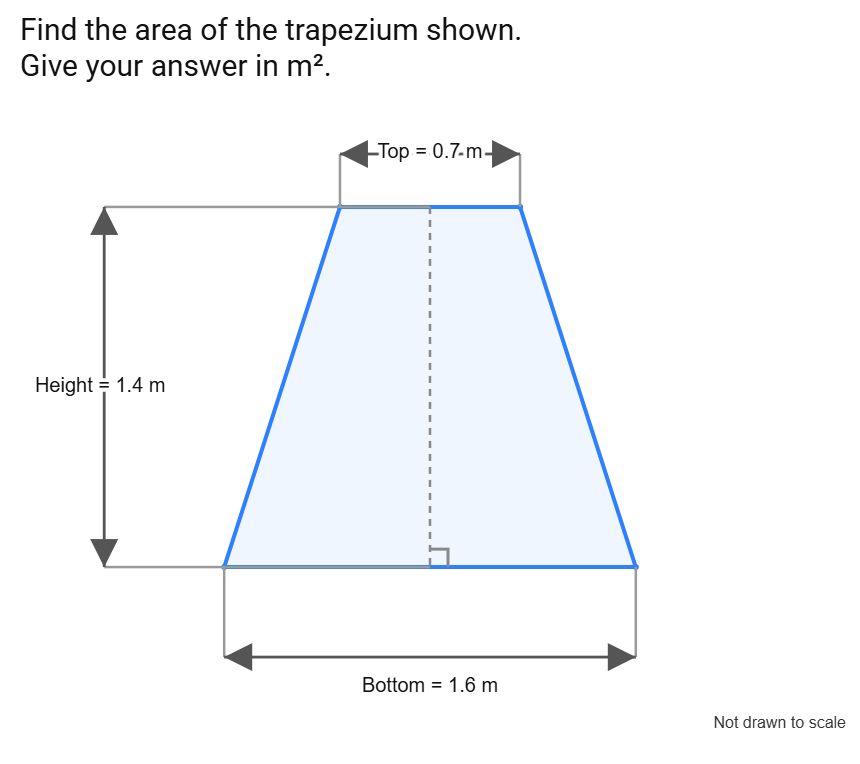
Topic: Area of a Trapezium

-
Area = m²
⌨️ Enter your answer in the field provided.
CorrectIncorrectHint
💡 Area of a trapezium: use Area = ½h(a + b), where h is the perpendicular height and a and b are the two parallel sides.
Find the two parallel sides first and then find the perpendicular height, which is the shortest distance between them at a right angle.
Convert any units first so h, a, and b are all in the same unit.
Substitute the values into Area = ½h(a + b), work out the bracket, and then finish the calculation.
Check that your final answer is in square units, such as cm2 or m2.
-
-
Question 4 of 50
4. Question
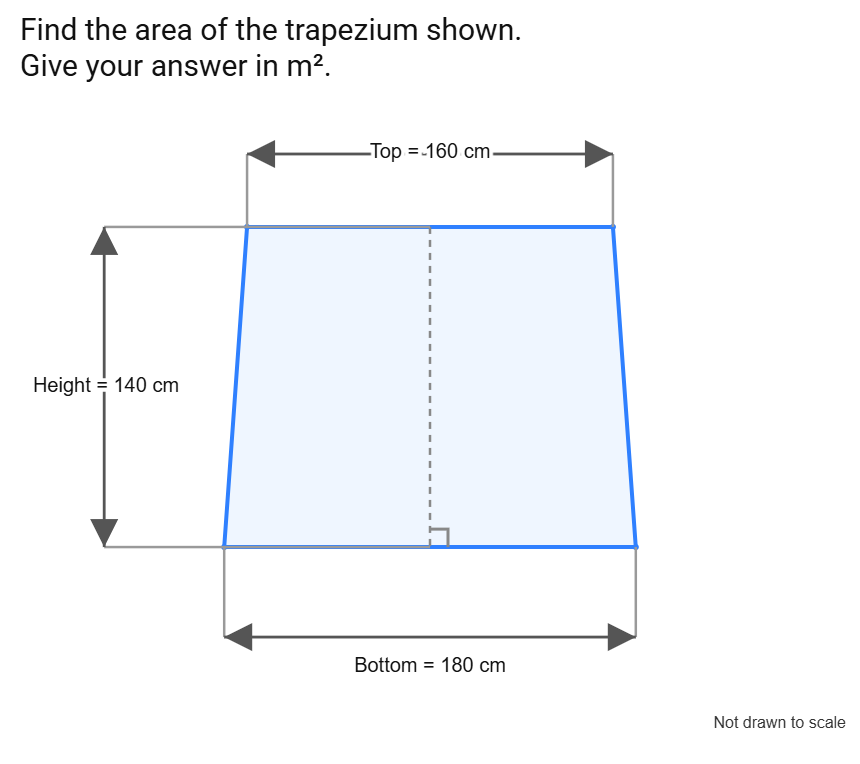
Topic: Area of a Trapezium
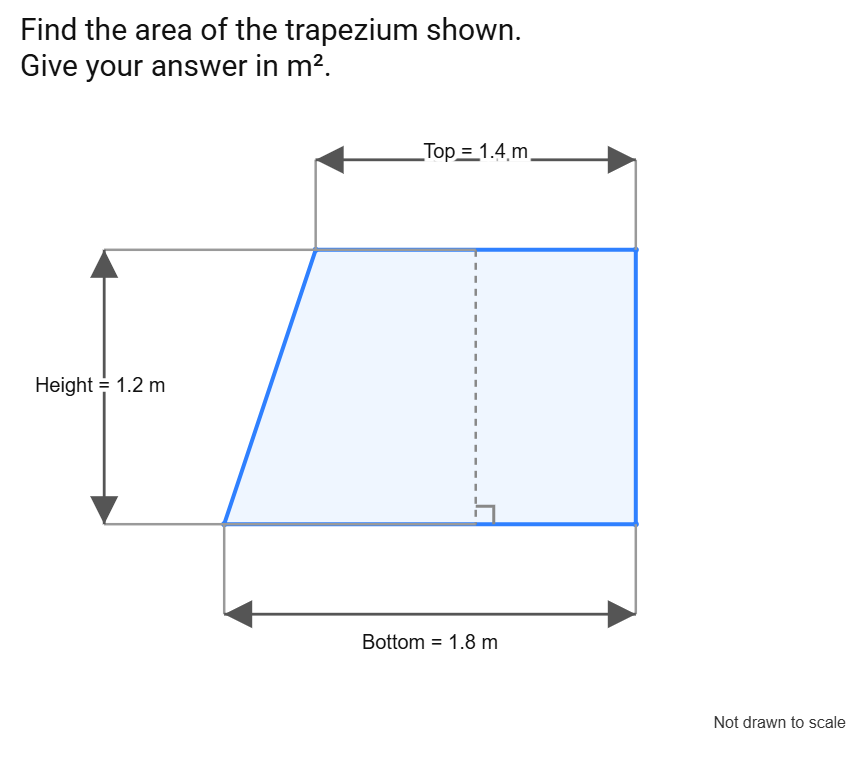
-
Area = m²
⌨️ Enter your answer in the field provided.
CorrectIncorrectHint
💡 Area of a trapezium: use Area = ½h(a + b), where h is the perpendicular height and a and b are the two parallel sides.
Find the two parallel sides first and then find the perpendicular height, which is the shortest distance between them at a right angle.
Convert any units first so h, a, and b are all in the same unit.
Substitute the values into Area = ½h(a + b), work out the bracket, and then finish the calculation.
Check that your final answer is in square units, such as cm2 or m2.
-
-
Question 5 of 50
5. Question
Topic: Area of a Trapezium

-
Area = m²
⌨️ Enter your answer in the field provided.
CorrectIncorrectHint
💡 Area of a trapezium: use Area = ½h(a + b), where h is the perpendicular height and a and b are the two parallel sides.
Find the two parallel sides first and then find the perpendicular height, which is the shortest distance between them at a right angle.
Convert any units first so h, a, and b are all in the same unit.
Substitute the values into Area = ½h(a + b), work out the bracket, and then finish the calculation.
Check that your final answer is in square units, such as cm2 or m2.
-
-
Question 6 of 50
6. Question
Topic: Area of a Trapezium
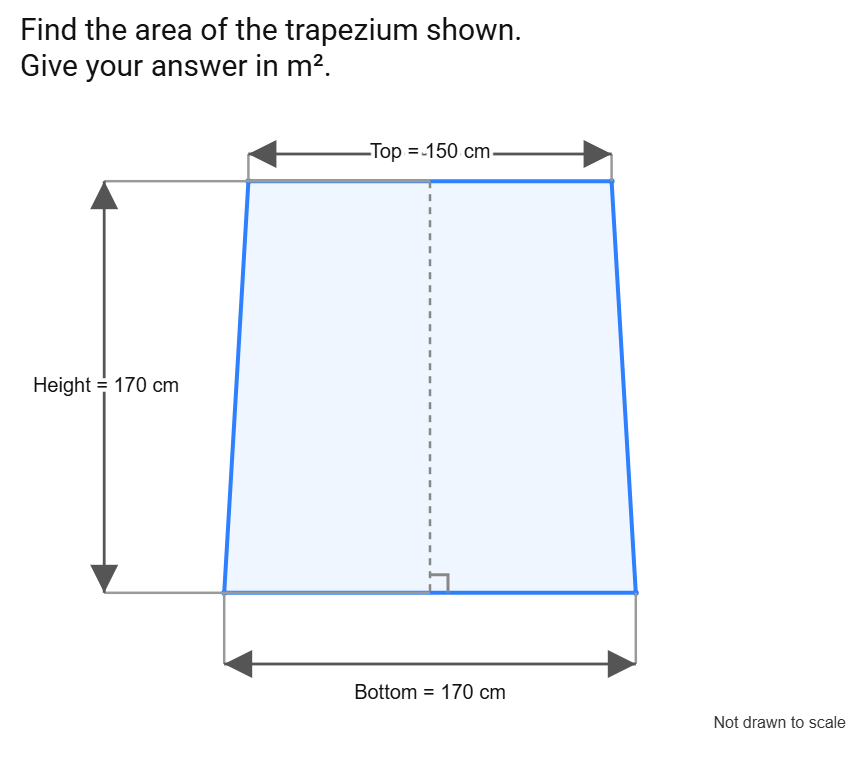
-
Area = m²
⌨️ Enter your answer in the field provided.
CorrectIncorrectHint
💡 Area of a trapezium: use Area = ½h(a + b), where h is the perpendicular height and a and b are the two parallel sides.
Find the two parallel sides first and then find the perpendicular height, which is the shortest distance between them at a right angle.
Convert any units first so h, a, and b are all in the same unit.
Substitute the values into Area = ½h(a + b), work out the bracket, and then finish the calculation.
Check that your final answer is in square units, such as cm2 or m2.
-
-
Question 7 of 50
7. Question
Topic: Area of a Trapezium
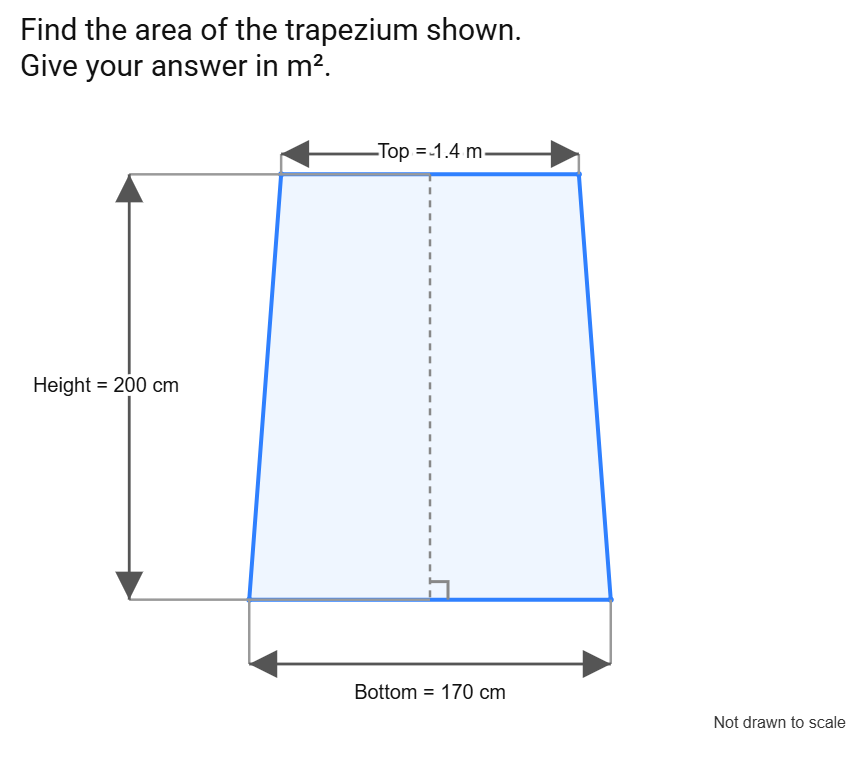
-
Area = m²
⌨️ Enter your answer in the field provided.
CorrectIncorrectHint
💡 Area of a trapezium: use Area = ½h(a + b), where h is the perpendicular height and a and b are the two parallel sides.
Find the two parallel sides first and then find the perpendicular height, which is the shortest distance between them at a right angle.
Convert any units first so h, a, and b are all in the same unit.
Substitute the values into Area = ½h(a + b), work out the bracket, and then finish the calculation.
Check that your final answer is in square units, such as cm2 or m2.
-
-
Question 8 of 50
8. Question
Topic: Area of a Trapezium
-
Area = m²
⌨️ Enter your answer in the field provided.
CorrectIncorrectHint
💡 Area of a trapezium: use Area = ½h(a + b), where h is the perpendicular height and a and b are the two parallel sides.
Find the two parallel sides first and then find the perpendicular height, which is the shortest distance between them at a right angle.
Convert any units first so h, a, and b are all in the same unit.
Substitute the values into Area = ½h(a + b), work out the bracket, and then finish the calculation.
Check that your final answer is in square units, such as cm2 or m2.
-
-
Question 9 of 50
9. Question
Topic: Area of a Trapezium

-
Area = m²
⌨️ Enter your answer in the field provided.
CorrectIncorrectHint
💡 Area of a trapezium: use Area = ½h(a + b), where h is the perpendicular height and a and b are the two parallel sides.
Find the two parallel sides first and then find the perpendicular height, which is the shortest distance between them at a right angle.
Convert any units first so h, a, and b are all in the same unit.
Substitute the values into Area = ½h(a + b), work out the bracket, and then finish the calculation.
Check that your final answer is in square units, such as cm2 or m2.
-
-
Question 10 of 50
10. Question
Topic: Area of a Trapezium

-
Area = m²
⌨️ Enter your answer in the field provided.
CorrectIncorrectHint
💡 Area of a trapezium: use Area = ½h(a + b), where h is the perpendicular height and a and b are the two parallel sides.
Find the two parallel sides first and then find the perpendicular height, which is the shortest distance between them at a right angle.
Convert any units first so h, a, and b are all in the same unit.
Substitute the values into Area = ½h(a + b), work out the bracket, and then finish the calculation.
Check that your final answer is in square units, such as cm2 or m2.
-
-
Question 11 of 50
11. Question
Topic: Area of a Trapezium

-
Area = m²
⌨️ Enter your answer in the field provided.
CorrectIncorrectHint
💡 Area of a trapezium: use Area = ½h(a + b), where h is the perpendicular height and a and b are the two parallel sides.
Find the two parallel sides first and then find the perpendicular height, which is the shortest distance between them at a right angle.
Convert any units first so h, a, and b are all in the same unit.
Substitute the values into Area = ½h(a + b), work out the bracket, and then finish the calculation.
Check that your final answer is in square units, such as cm2 or m2.
-
-
Question 12 of 50
12. Question
Topic: Area of a Trapezium

-
Area = m²
⌨️ Enter your answer in the field provided.
CorrectIncorrectHint
💡 Area of a trapezium: use Area = ½h(a + b), where h is the perpendicular height and a and b are the two parallel sides.
Find the two parallel sides first and then find the perpendicular height, which is the shortest distance between them at a right angle.
Convert any units first so h, a, and b are all in the same unit.
Substitute the values into Area = ½h(a + b), work out the bracket, and then finish the calculation.
Check that your final answer is in square units, such as cm2 or m2.
-
-
Question 13 of 50
13. Question
Topic: Area of a Trapezium

-
Area = m²
⌨️ Enter your answer in the field provided.
CorrectIncorrectHint
💡 Area of a trapezium: use Area = ½h(a + b), where h is the perpendicular height and a and b are the two parallel sides.
Find the two parallel sides first and then find the perpendicular height, which is the shortest distance between them at a right angle.
Convert any units first so h, a, and b are all in the same unit.
Substitute the values into Area = ½h(a + b), work out the bracket, and then finish the calculation.
Check that your final answer is in square units, such as cm2 or m2.
-
-
Question 14 of 50
14. Question
Topic: Area of a Trapezium

-
Area = m²
⌨️ Enter your answer in the field provided.
CorrectIncorrectHint
💡 Area of a trapezium: use Area = ½h(a + b), where h is the perpendicular height and a and b are the two parallel sides.
Find the two parallel sides first and then find the perpendicular height, which is the shortest distance between them at a right angle.
Convert any units first so h, a, and b are all in the same unit.
Substitute the values into Area = ½h(a + b), work out the bracket, and then finish the calculation.
Check that your final answer is in square units, such as cm2 or m2.
-
-
Question 15 of 50
15. Question
Topic: Area of a Trapezium

-
Area = m²
⌨️ Enter your answer in the field provided.
CorrectIncorrectHint
💡 Area of a trapezium: use Area = ½h(a + b), where h is the perpendicular height and a and b are the two parallel sides.
Find the two parallel sides first and then find the perpendicular height, which is the shortest distance between them at a right angle.
Convert any units first so h, a, and b are all in the same unit.
Substitute the values into Area = ½h(a + b), work out the bracket, and then finish the calculation.
Check that your final answer is in square units, such as cm2 or m2.
-
-
Question 16 of 50
16. Question
Topic: Area of a Trapezium

-
Area = m²
⌨️ Enter your answer in the field provided.
CorrectIncorrectHint
💡 Area of a trapezium: use Area = ½h(a + b), where h is the perpendicular height and a and b are the two parallel sides.
Find the two parallel sides first and then find the perpendicular height, which is the shortest distance between them at a right angle.
Convert any units first so h, a, and b are all in the same unit.
Substitute the values into Area = ½h(a + b), work out the bracket, and then finish the calculation.
Check that your final answer is in square units, such as cm2 or m2.
-
-
Question 17 of 50
17. Question
Topic: Area of a Trapezium

-
Area = m²
⌨️ Enter your answer in the field provided.
CorrectIncorrectHint
💡 Area of a trapezium: use Area = ½h(a + b), where h is the perpendicular height and a and b are the two parallel sides.
Find the two parallel sides first and then find the perpendicular height, which is the shortest distance between them at a right angle.
Convert any units first so h, a, and b are all in the same unit.
Substitute the values into Area = ½h(a + b), work out the bracket, and then finish the calculation.
Check that your final answer is in square units, such as cm2 or m2.
-
-
Question 18 of 50
18. Question
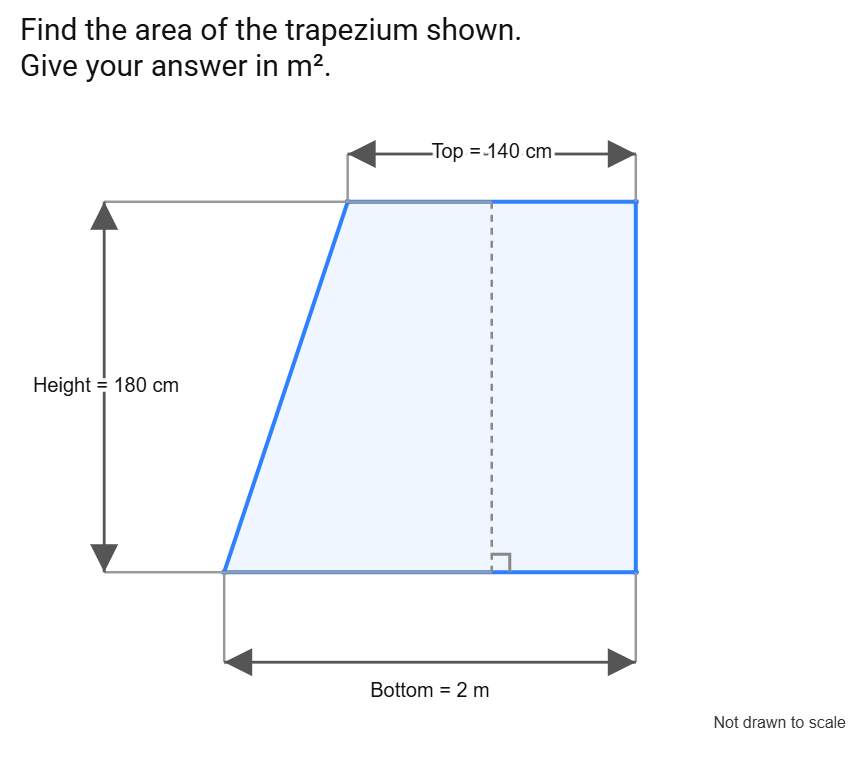
Topic: Area of a Trapezium
-
Area = m²
⌨️ Enter your answer in the field provided.
CorrectIncorrectHint
💡 Area of a trapezium: use Area = ½h(a + b), where h is the perpendicular height and a and b are the two parallel sides.
Find the two parallel sides first and then find the perpendicular height, which is the shortest distance between them at a right angle.
Convert any units first so h, a, and b are all in the same unit.
Substitute the values into Area = ½h(a + b), work out the bracket, and then finish the calculation.
Check that your final answer is in square units, such as cm2 or m2.
-
-
Question 19 of 50
19. Question
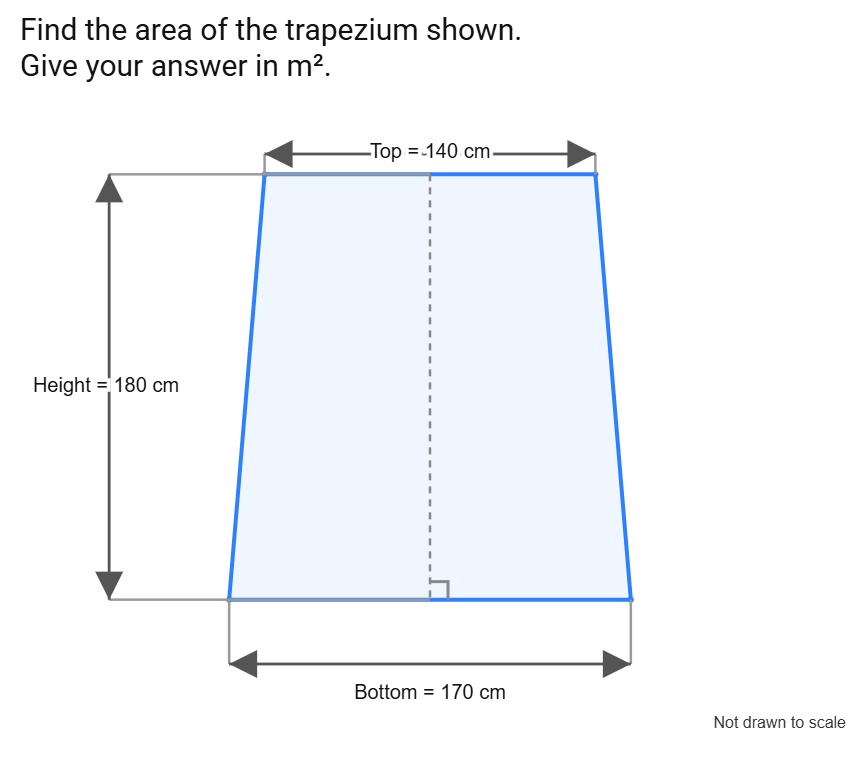
Topic: Area of a Trapezium
-
Area = m²
⌨️ Enter your answer in the field provided.
CorrectIncorrectHint
💡 Area of a trapezium: use Area = ½h(a + b), where h is the perpendicular height and a and b are the two parallel sides.
Find the two parallel sides first and then find the perpendicular height, which is the shortest distance between them at a right angle.
Convert any units first so h, a, and b are all in the same unit.
Substitute the values into Area = ½h(a + b), work out the bracket, and then finish the calculation.
Check that your final answer is in square units, such as cm2 or m2.
-
-
Question 20 of 50
20. Question
Topic: Area of a Trapezium

-
Area = m²
⌨️ Enter your answer in the field provided.
CorrectIncorrectHint
💡 Area of a trapezium: use Area = ½h(a + b), where h is the perpendicular height and a and b are the two parallel sides.
Find the two parallel sides first and then find the perpendicular height, which is the shortest distance between them at a right angle.
Convert any units first so h, a, and b are all in the same unit.
Substitute the values into Area = ½h(a + b), work out the bracket, and then finish the calculation.
Check that your final answer is in square units, such as cm2 or m2.
-
-
Question 21 of 50
21. Question
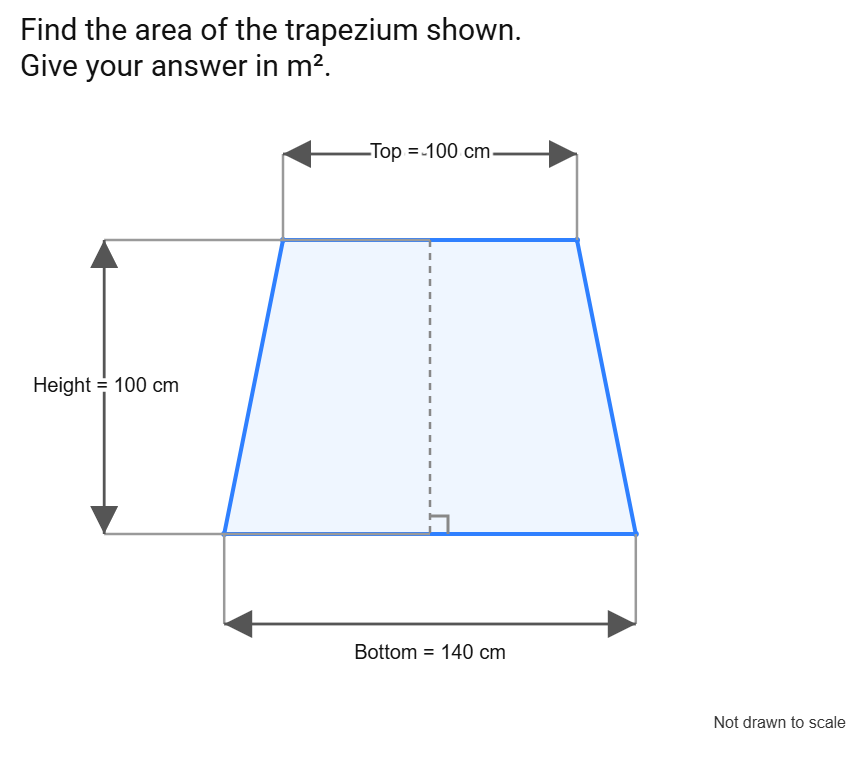
Topic: Area of a Trapezium
-
Area = m²
⌨️ Enter your answer in the field provided.
CorrectIncorrectHint
💡 Area of a trapezium: use Area = ½h(a + b), where h is the perpendicular height and a and b are the two parallel sides.
Find the two parallel sides first and then find the perpendicular height, which is the shortest distance between them at a right angle.
Convert any units first so h, a, and b are all in the same unit.
Substitute the values into Area = ½h(a + b), work out the bracket, and then finish the calculation.
Check that your final answer is in square units, such as cm2 or m2.
-
-
Question 22 of 50
22. Question
Topic: Area of a Trapezium
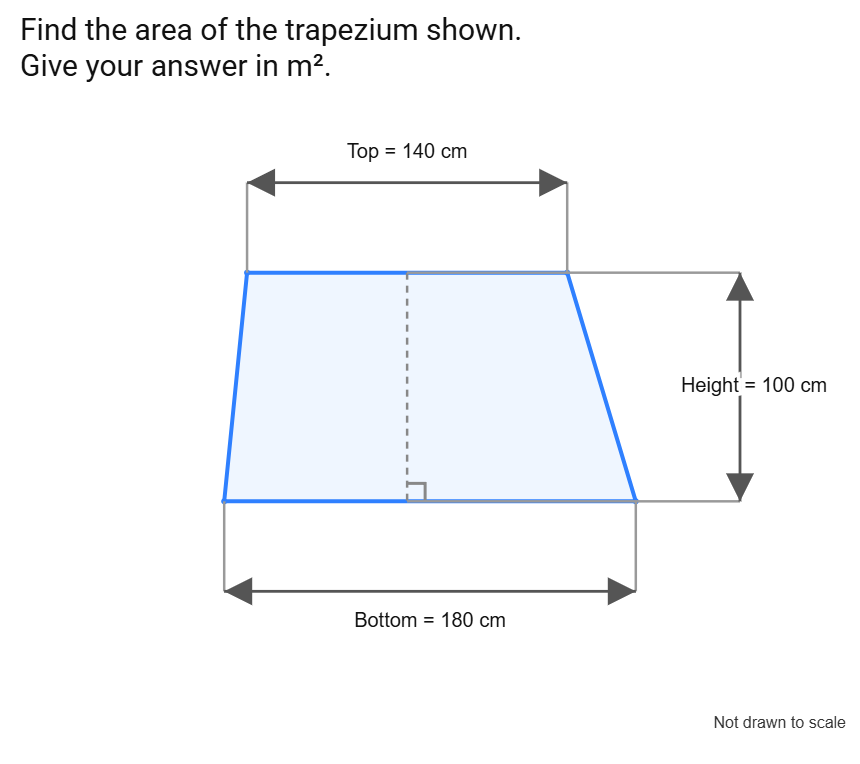
-
Area = m²
⌨️ Enter your answer in the field provided.
CorrectIncorrectHint
💡 Area of a trapezium: use Area = ½h(a + b), where h is the perpendicular height and a and b are the two parallel sides.
Find the two parallel sides first and then find the perpendicular height, which is the shortest distance between them at a right angle.
Convert any units first so h, a, and b are all in the same unit.
Substitute the values into Area = ½h(a + b), work out the bracket, and then finish the calculation.
Check that your final answer is in square units, such as cm2 or m2.
-
-
Question 23 of 50
23. Question
Topic: Area of a Trapezium

-
Area = m²
⌨️ Enter your answer in the field provided.
CorrectIncorrectHint
💡 Area of a trapezium: use Area = ½h(a + b), where h is the perpendicular height and a and b are the two parallel sides.
Find the two parallel sides first and then find the perpendicular height, which is the shortest distance between them at a right angle.
Convert any units first so h, a, and b are all in the same unit.
Substitute the values into Area = ½h(a + b), work out the bracket, and then finish the calculation.
Check that your final answer is in square units, such as cm2 or m2.
-
-
Question 24 of 50
24. Question
Topic: Area of a Trapezium
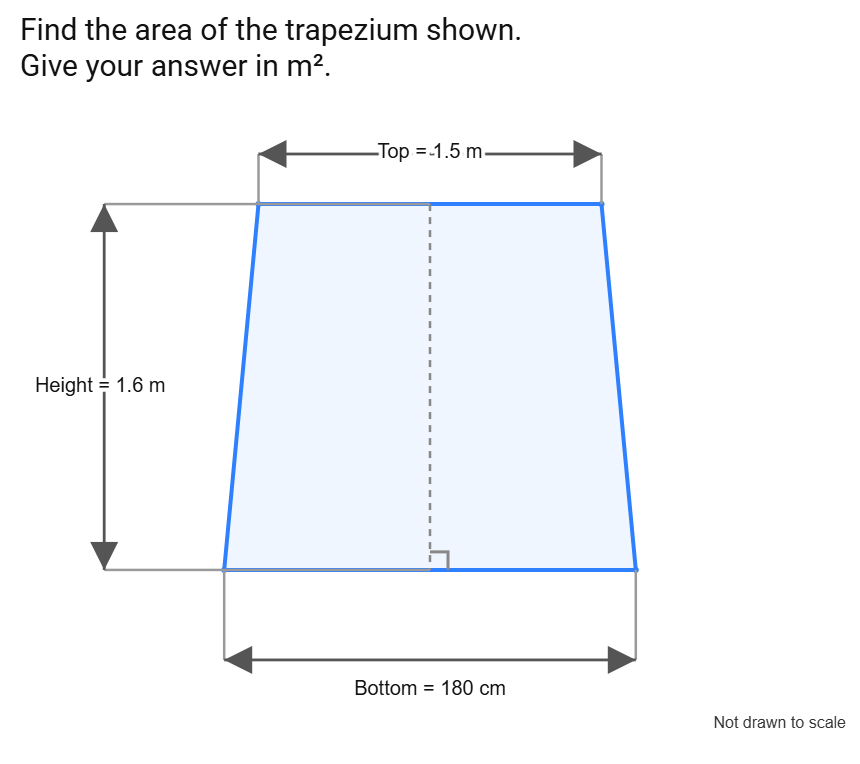
-
Area = m²
⌨️ Enter your answer in the field provided.
CorrectIncorrectHint
💡 Area of a trapezium: use Area = ½h(a + b), where h is the perpendicular height and a and b are the two parallel sides.
Find the two parallel sides first and then find the perpendicular height, which is the shortest distance between them at a right angle.
Convert any units first so h, a, and b are all in the same unit.
Substitute the values into Area = ½h(a + b), work out the bracket, and then finish the calculation.
Check that your final answer is in square units, such as cm2 or m2.
-
-
Question 25 of 50
25. Question
Topic: Area of a Trapezium
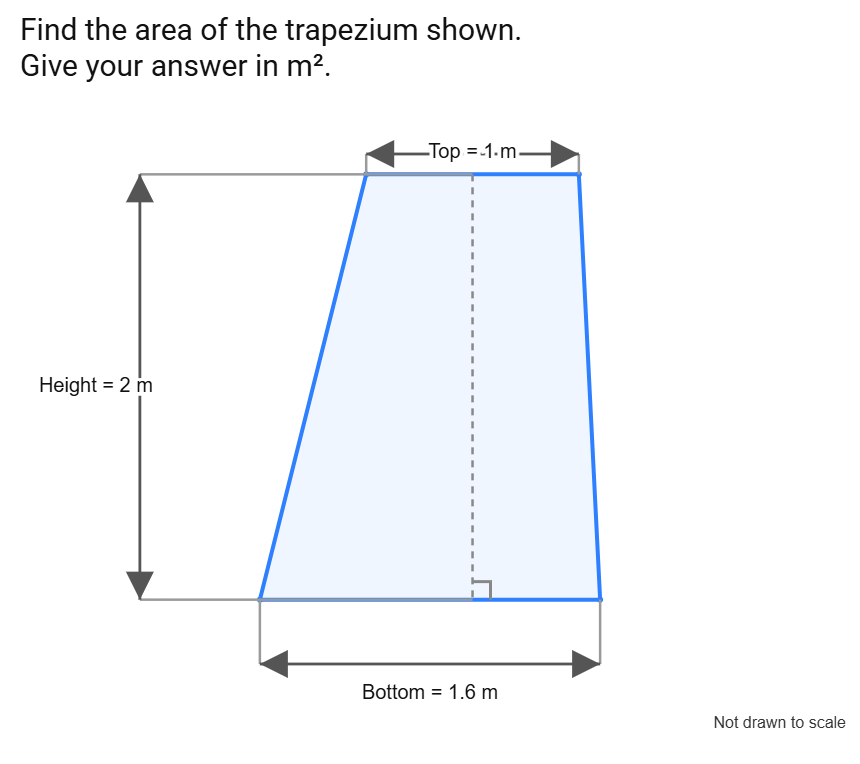
-
Area = m²
⌨️ Enter your answer in the field provided.
CorrectIncorrectHint
💡 Area of a trapezium: use Area = ½h(a + b), where h is the perpendicular height and a and b are the two parallel sides.
Find the two parallel sides first and then find the perpendicular height, which is the shortest distance between them at a right angle.
Convert any units first so h, a, and b are all in the same unit.
Substitute the values into Area = ½h(a + b), work out the bracket, and then finish the calculation.
Check that your final answer is in square units, such as cm2 or m2.
-
-
Question 26 of 50
26. Question
Topic: Area of a Trapezium

-
Area = m²
⌨️ Enter your answer in the field provided.
CorrectIncorrectHint
💡 Area of a trapezium: use Area = ½h(a + b), where h is the perpendicular height and a and b are the two parallel sides.
Find the two parallel sides first and then find the perpendicular height, which is the shortest distance between them at a right angle.
Convert any units first so h, a, and b are all in the same unit.
Substitute the values into Area = ½h(a + b), work out the bracket, and then finish the calculation.
Check that your final answer is in square units, such as cm2 or m2.
-
-
Question 27 of 50
27. Question
Topic: Area of a Trapezium

-
Area = m²
⌨️ Enter your answer in the field provided.
CorrectIncorrectHint
💡 Area of a trapezium: use Area = ½h(a + b), where h is the perpendicular height and a and b are the two parallel sides.
Find the two parallel sides first and then find the perpendicular height, which is the shortest distance between them at a right angle.
Convert any units first so h, a, and b are all in the same unit.
Substitute the values into Area = ½h(a + b), work out the bracket, and then finish the calculation.
Check that your final answer is in square units, such as cm2 or m2.
-
-
Question 28 of 50
28. Question
Topic: Area of a Trapezium
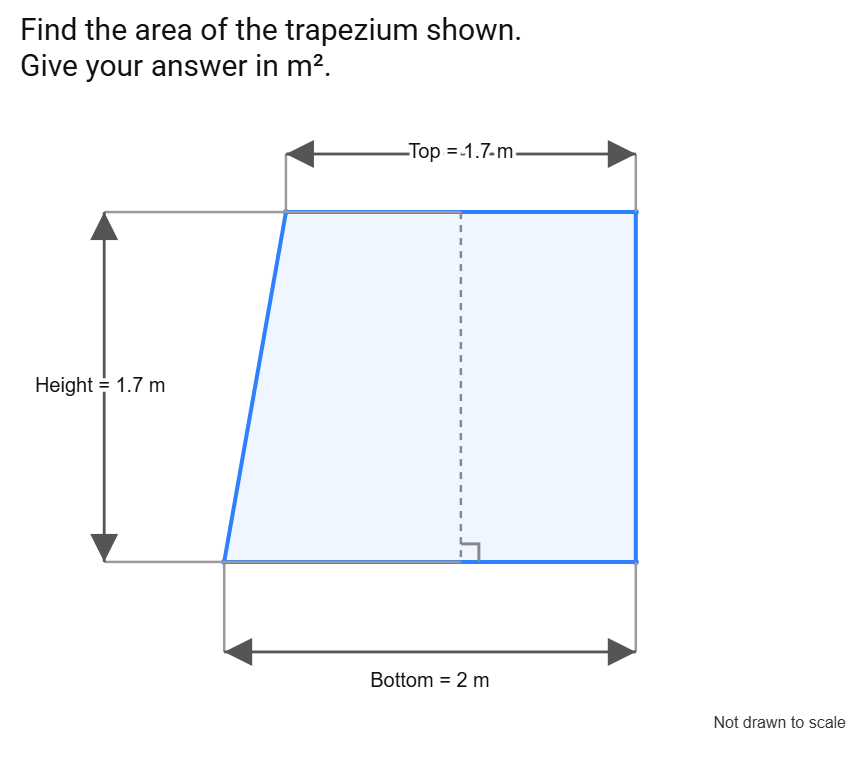
-
Area = m²
⌨️ Enter your answer in the field provided.
CorrectIncorrectHint
💡 Area of a trapezium: use Area = ½h(a + b), where h is the perpendicular height and a and b are the two parallel sides.
Find the two parallel sides first and then find the perpendicular height, which is the shortest distance between them at a right angle.
Convert any units first so h, a, and b are all in the same unit.
Substitute the values into Area = ½h(a + b), work out the bracket, and then finish the calculation.
Check that your final answer is in square units, such as cm2 or m2.
-
-
Question 29 of 50
29. Question
Topic: Area of a Trapezium
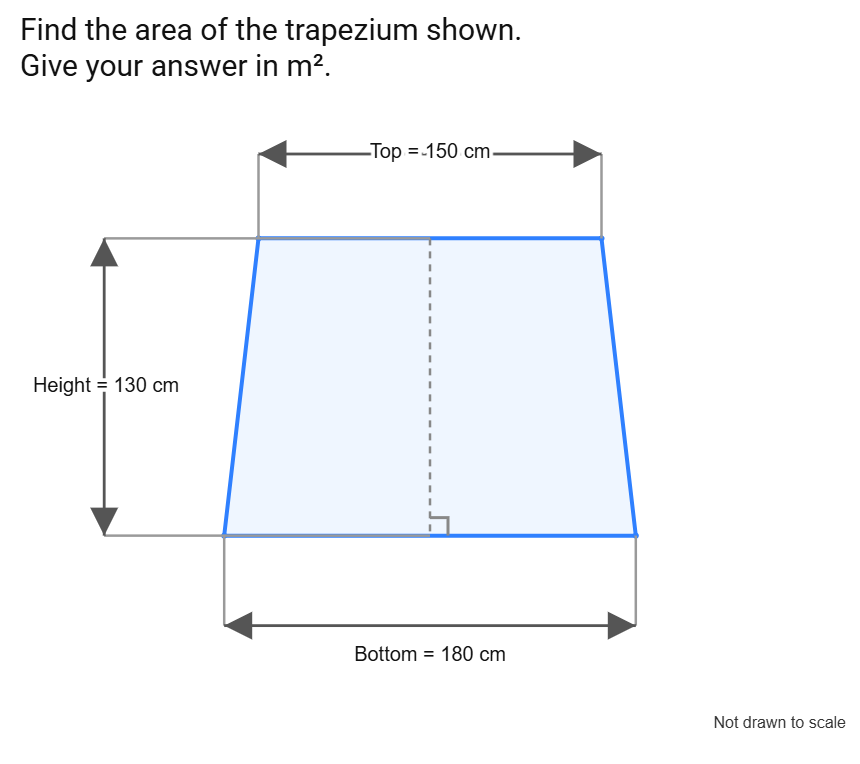
-
Area = m²
⌨️ Enter your answer in the field provided.
CorrectIncorrectHint
💡 Area of a trapezium: use Area = ½h(a + b), where h is the perpendicular height and a and b are the two parallel sides.
Find the two parallel sides first and then find the perpendicular height, which is the shortest distance between them at a right angle.
Convert any units first so h, a, and b are all in the same unit.
Substitute the values into Area = ½h(a + b), work out the bracket, and then finish the calculation.
Check that your final answer is in square units, such as cm2 or m2.
-
-
Question 30 of 50
30. Question
Topic: Area of a Trapezium

-
Area = m²
⌨️ Enter your answer in the field provided.
CorrectIncorrectHint
💡 Area of a trapezium: use Area = ½h(a + b), where h is the perpendicular height and a and b are the two parallel sides.
Find the two parallel sides first and then find the perpendicular height, which is the shortest distance between them at a right angle.
Convert any units first so h, a, and b are all in the same unit.
Substitute the values into Area = ½h(a + b), work out the bracket, and then finish the calculation.
Check that your final answer is in square units, such as cm2 or m2.
-
-
Question 31 of 50
31. Question
Topic: Area of a Trapezium
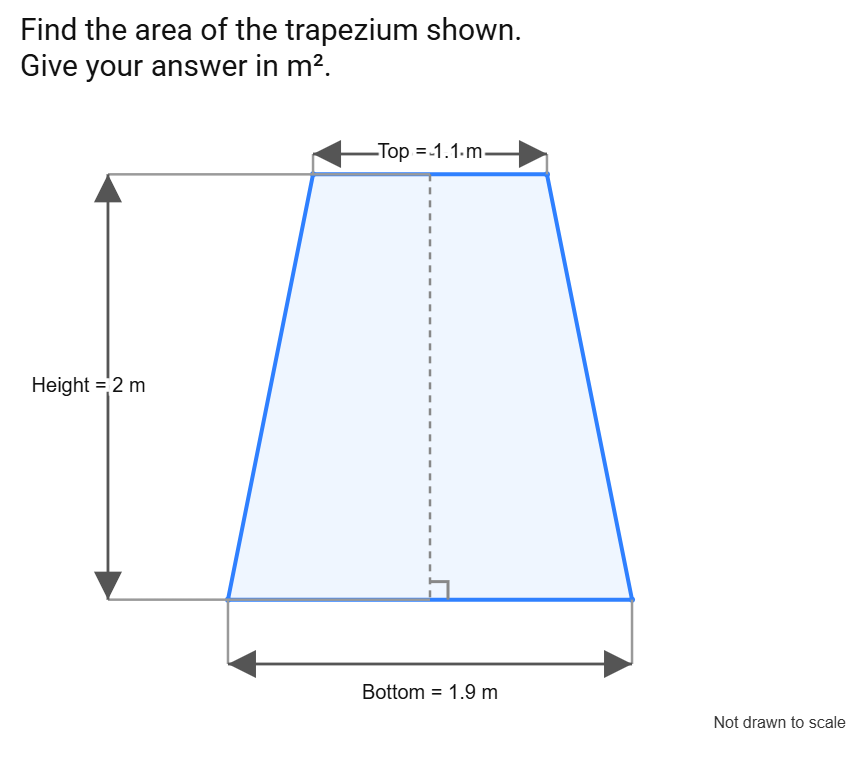
-
Area = m²
⌨️ Enter your answer in the field provided.
CorrectIncorrectHint
💡 Area of a trapezium: use Area = ½h(a + b), where h is the perpendicular height and a and b are the two parallel sides.
Find the two parallel sides first and then find the perpendicular height, which is the shortest distance between them at a right angle.
Convert any units first so h, a, and b are all in the same unit.
Substitute the values into Area = ½h(a + b), work out the bracket, and then finish the calculation.
Check that your final answer is in square units, such as cm2 or m2.
-
-
Question 32 of 50
32. Question
Topic: Area of a Trapezium

-
Area = m²
⌨️ Enter your answer in the field provided.
CorrectIncorrectHint
💡 Area of a trapezium: use Area = ½h(a + b), where h is the perpendicular height and a and b are the two parallel sides.
Find the two parallel sides first and then find the perpendicular height, which is the shortest distance between them at a right angle.
Convert any units first so h, a, and b are all in the same unit.
Substitute the values into Area = ½h(a + b), work out the bracket, and then finish the calculation.
Check that your final answer is in square units, such as cm2 or m2.
-
-
Question 33 of 50
33. Question
Topic: Area of a Trapezium
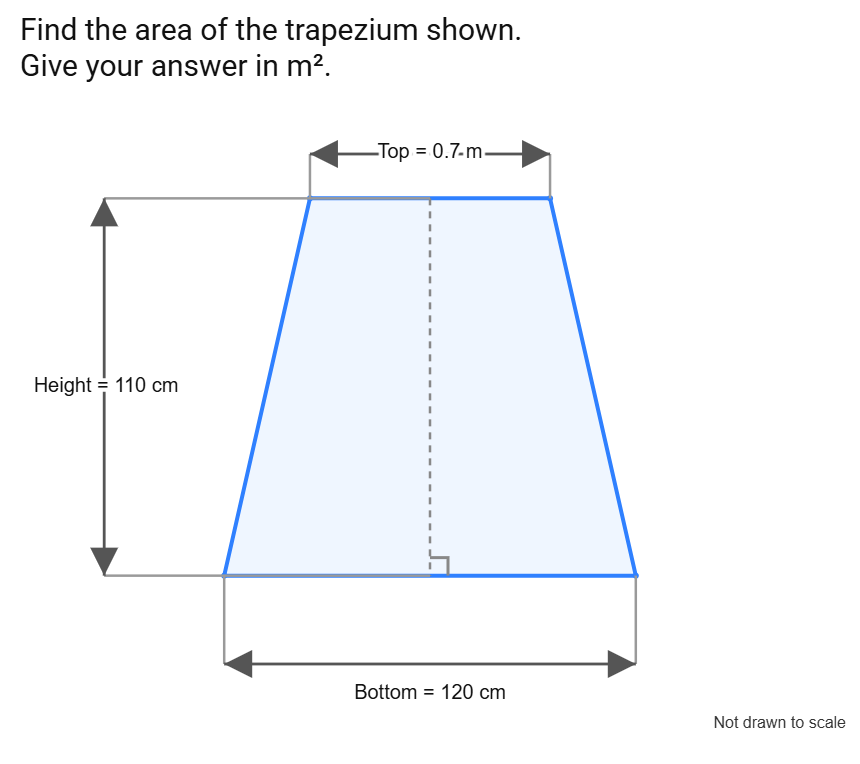
-
Area = m²
⌨️ Enter your answer in the field provided.
CorrectIncorrectHint
💡 Area of a trapezium: use Area = ½h(a + b), where h is the perpendicular height and a and b are the two parallel sides.
Find the two parallel sides first and then find the perpendicular height, which is the shortest distance between them at a right angle.
Convert any units first so h, a, and b are all in the same unit.
Substitute the values into Area = ½h(a + b), work out the bracket, and then finish the calculation.
Check that your final answer is in square units, such as cm2 or m2.
-
-
Question 34 of 50
34. Question
Topic: Area of a Trapezium

-
Area = m²
⌨️ Enter your answer in the field provided.
CorrectIncorrectHint
💡 Area of a trapezium: use Area = ½h(a + b), where h is the perpendicular height and a and b are the two parallel sides.
Find the two parallel sides first and then find the perpendicular height, which is the shortest distance between them at a right angle.
Convert any units first so h, a, and b are all in the same unit.
Substitute the values into Area = ½h(a + b), work out the bracket, and then finish the calculation.
Check that your final answer is in square units, such as cm2 or m2.
-
-
Question 35 of 50
35. Question
Topic: Area of a Trapezium
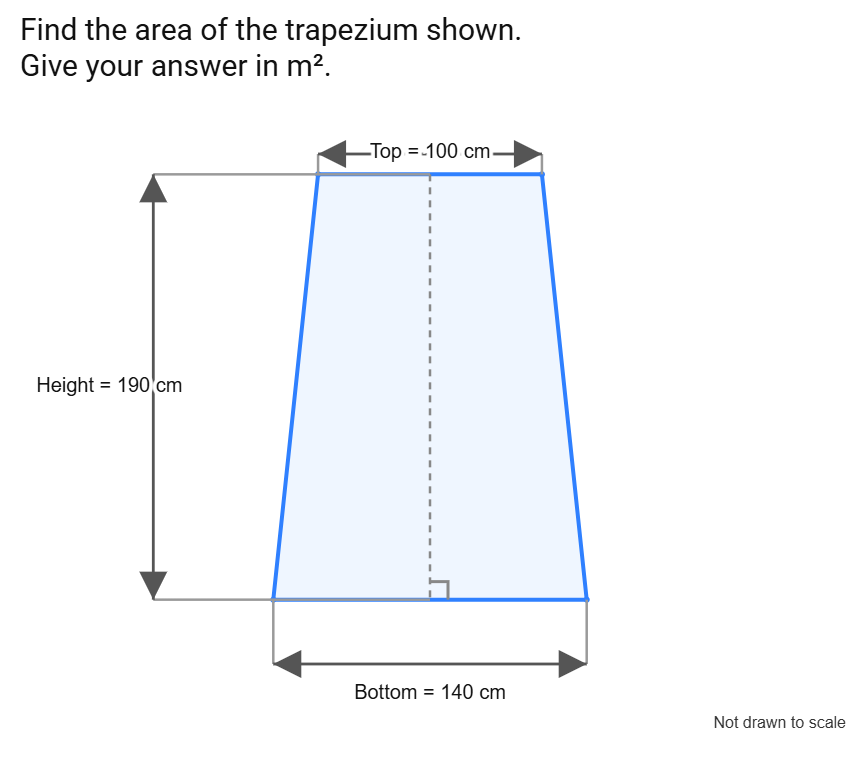
-
Area = m²
⌨️ Enter your answer in the field provided.
CorrectIncorrectHint
💡 Area of a trapezium: use Area = ½h(a + b), where h is the perpendicular height and a and b are the two parallel sides.
Find the two parallel sides first and then find the perpendicular height, which is the shortest distance between them at a right angle.
Convert any units first so h, a, and b are all in the same unit.
Substitute the values into Area = ½h(a + b), work out the bracket, and then finish the calculation.
Check that your final answer is in square units, such as cm2 or m2.
-
-
Question 36 of 50
36. Question
Topic: Area of a Trapezium
-
Area = m²
⌨️ Enter your answer in the field provided.
CorrectIncorrectHint
💡 Area of a trapezium: use Area = ½h(a + b), where h is the perpendicular height and a and b are the two parallel sides.
Find the two parallel sides first and then find the perpendicular height, which is the shortest distance between them at a right angle.
Convert any units first so h, a, and b are all in the same unit.
Substitute the values into Area = ½h(a + b), work out the bracket, and then finish the calculation.
Check that your final answer is in square units, such as cm2 or m2.
-
-
Question 37 of 50
37. Question
Topic: Area of a Trapezium
-
Area = m²
⌨️ Enter your answer in the field provided.
CorrectIncorrectHint
💡 Area of a trapezium: use Area = ½h(a + b), where h is the perpendicular height and a and b are the two parallel sides.
Find the two parallel sides first and then find the perpendicular height, which is the shortest distance between them at a right angle.
Convert any units first so h, a, and b are all in the same unit.
Substitute the values into Area = ½h(a + b), work out the bracket, and then finish the calculation.
Check that your final answer is in square units, such as cm2 or m2.
-
-
Question 38 of 50
38. Question
Topic: Area of a Trapezium

-
Area = m²
⌨️ Enter your answer in the field provided.
CorrectIncorrectHint
💡 Area of a trapezium: use Area = ½h(a + b), where h is the perpendicular height and a and b are the two parallel sides.
Find the two parallel sides first and then find the perpendicular height, which is the shortest distance between them at a right angle.
Convert any units first so h, a, and b are all in the same unit.
Substitute the values into Area = ½h(a + b), work out the bracket, and then finish the calculation.
Check that your final answer is in square units, such as cm2 or m2.
-
-
Question 39 of 50
39. Question
Topic: Area of a Trapezium

-
Area = m²
⌨️ Enter your answer in the field provided.
CorrectIncorrectHint
💡 Area of a trapezium: use Area = ½h(a + b), where h is the perpendicular height and a and b are the two parallel sides.
Find the two parallel sides first and then find the perpendicular height, which is the shortest distance between them at a right angle.
Convert any units first so h, a, and b are all in the same unit.
Substitute the values into Area = ½h(a + b), work out the bracket, and then finish the calculation.
Check that your final answer is in square units, such as cm2 or m2.
-
-
Question 40 of 50
40. Question
Topic: Area of a Trapezium
-
Area = m²
⌨️ Enter your answer in the field provided.
CorrectIncorrectHint
💡 Area of a trapezium: use Area = ½h(a + b), where h is the perpendicular height and a and b are the two parallel sides.
Find the two parallel sides first and then find the perpendicular height, which is the shortest distance between them at a right angle.
Convert any units first so h, a, and b are all in the same unit.
Substitute the values into Area = ½h(a + b), work out the bracket, and then finish the calculation.
Check that your final answer is in square units, such as cm2 or m2.
-
-
Question 41 of 50
41. Question
Topic: Area of a Trapezium

-
Area = m²
⌨️ Enter your answer in the field provided.
CorrectIncorrectHint
💡 Area of a trapezium: use Area = ½h(a + b), where h is the perpendicular height and a and b are the two parallel sides.
Find the two parallel sides first and then find the perpendicular height, which is the shortest distance between them at a right angle.
Convert any units first so h, a, and b are all in the same unit.
Substitute the values into Area = ½h(a + b), work out the bracket, and then finish the calculation.
Check that your final answer is in square units, such as cm2 or m2.
-
-
Question 42 of 50
42. Question
Topic: Area of a Trapezium

-
Area = m²
⌨️ Enter your answer in the field provided.
CorrectIncorrectHint
💡 Area of a trapezium: use Area = ½h(a + b), where h is the perpendicular height and a and b are the two parallel sides.
Find the two parallel sides first and then find the perpendicular height, which is the shortest distance between them at a right angle.
Convert any units first so h, a, and b are all in the same unit.
Substitute the values into Area = ½h(a + b), work out the bracket, and then finish the calculation.
Check that your final answer is in square units, such as cm2 or m2.
-
-
Question 43 of 50
43. Question
Topic: Area of a Trapezium
-
Area = m²
⌨️ Enter your answer in the field provided.
CorrectIncorrectHint
💡 Area of a trapezium: use Area = ½h(a + b), where h is the perpendicular height and a and b are the two parallel sides.
Find the two parallel sides first and then find the perpendicular height, which is the shortest distance between them at a right angle.
Convert any units first so h, a, and b are all in the same unit.
Substitute the values into Area = ½h(a + b), work out the bracket, and then finish the calculation.
Check that your final answer is in square units, such as cm2 or m2.
-
-
Question 44 of 50
44. Question
Topic: Area of a Trapezium

-
Area = m²
⌨️ Enter your answer in the field provided.
CorrectIncorrectHint
💡 Area of a trapezium: use Area = ½h(a + b), where h is the perpendicular height and a and b are the two parallel sides.
Find the two parallel sides first and then find the perpendicular height, which is the shortest distance between them at a right angle.
Convert any units first so h, a, and b are all in the same unit.
Substitute the values into Area = ½h(a + b), work out the bracket, and then finish the calculation.
Check that your final answer is in square units, such as cm2 or m2.
-
-
Question 45 of 50
45. Question
Topic: Area of a Trapezium

-
Area = m²
⌨️ Enter your answer in the field provided.
CorrectIncorrectHint
💡 Area of a trapezium: use Area = ½h(a + b), where h is the perpendicular height and a and b are the two parallel sides.
Find the two parallel sides first and then find the perpendicular height, which is the shortest distance between them at a right angle.
Convert any units first so h, a, and b are all in the same unit.
Substitute the values into Area = ½h(a + b), work out the bracket, and then finish the calculation.
Check that your final answer is in square units, such as cm2 or m2.
-
-
Question 46 of 50
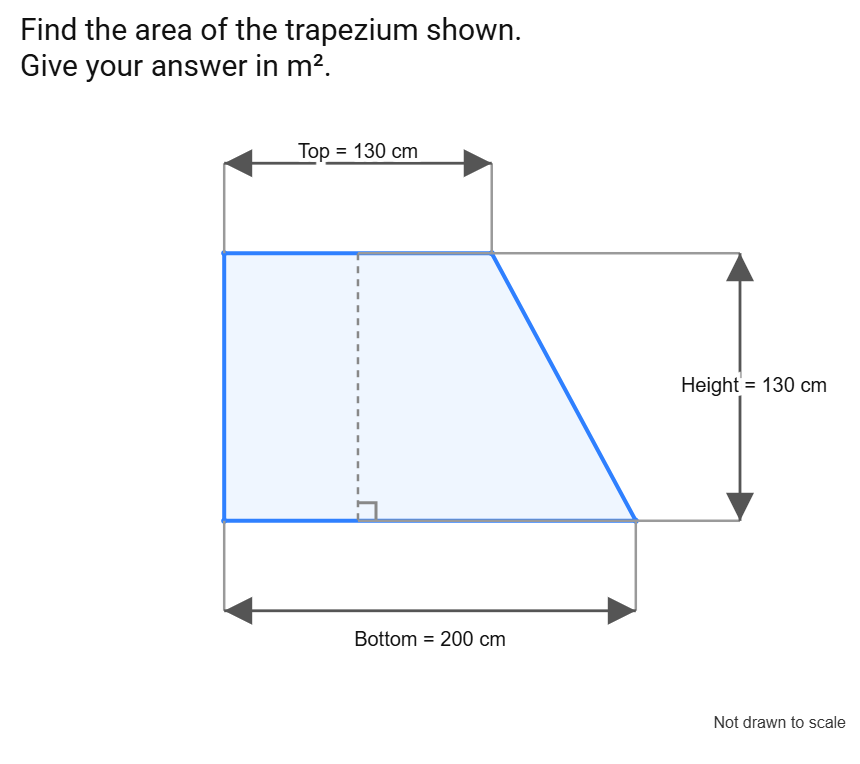
46. Question
Topic: Area of a Trapezium
-
Area = m²
⌨️ Enter your answer in the field provided.
CorrectIncorrectHint
💡 Area of a trapezium: use Area = ½h(a + b), where h is the perpendicular height and a and b are the two parallel sides.
Find the two parallel sides first and then find the perpendicular height, which is the shortest distance between them at a right angle.
Convert any units first so h, a, and b are all in the same unit.
Substitute the values into Area = ½h(a + b), work out the bracket, and then finish the calculation.
Check that your final answer is in square units, such as cm2 or m2.
-
-
Question 47 of 50
47. Question
Topic: Area of a Trapezium

-
Area = m²
⌨️ Enter your answer in the field provided.
CorrectIncorrectHint
💡 Area of a trapezium: use Area = ½h(a + b), where h is the perpendicular height and a and b are the two parallel sides.
Find the two parallel sides first and then find the perpendicular height, which is the shortest distance between them at a right angle.
Convert any units first so h, a, and b are all in the same unit.
Substitute the values into Area = ½h(a + b), work out the bracket, and then finish the calculation.
Check that your final answer is in square units, such as cm2 or m2.
-
-
Question 48 of 50
48. Question
Topic: Area of a Trapezium

-
Area = m²
⌨️ Enter your answer in the field provided.
CorrectIncorrectHint
💡 Area of a trapezium: use Area = ½h(a + b), where h is the perpendicular height and a and b are the two parallel sides.
Find the two parallel sides first and then find the perpendicular height, which is the shortest distance between them at a right angle.
Convert any units first so h, a, and b are all in the same unit.
Substitute the values into Area = ½h(a + b), work out the bracket, and then finish the calculation.
Check that your final answer is in square units, such as cm2 or m2.
-
-
Question 49 of 50
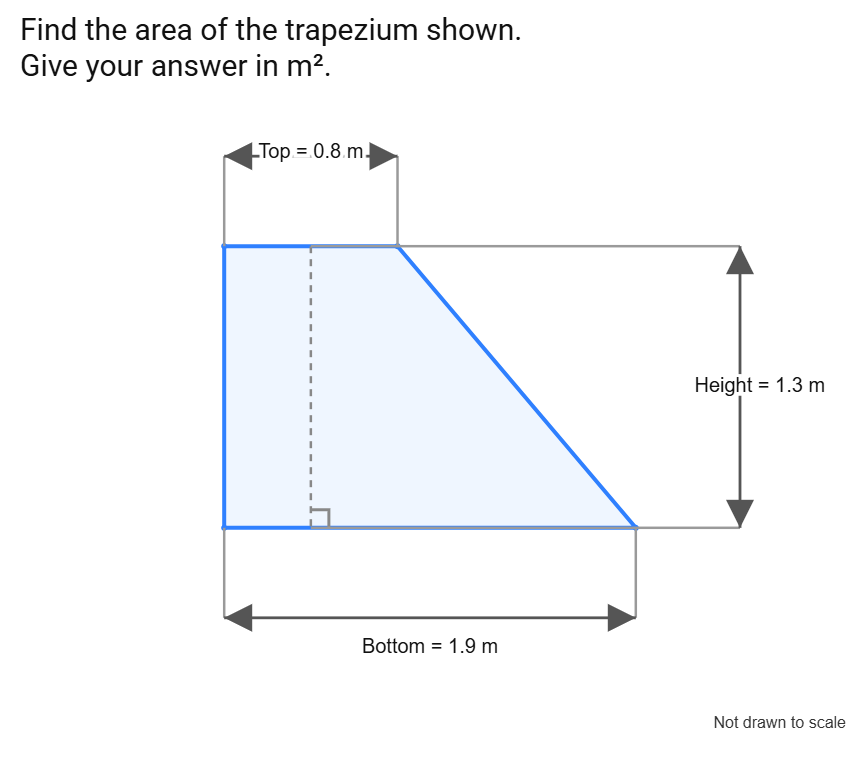
49. Question
Topic: Area of a Trapezium
-
Area = m²
⌨️ Enter your answer in the field provided.
CorrectIncorrectHint
💡 Area of a trapezium: use Area = ½h(a + b), where h is the perpendicular height and a and b are the two parallel sides.
Find the two parallel sides first and then find the perpendicular height, which is the shortest distance between them at a right angle.
Convert any units first so h, a, and b are all in the same unit.
Substitute the values into Area = ½h(a + b), work out the bracket, and then finish the calculation.
Check that your final answer is in square units, such as cm2 or m2.
-
-
Question 50 of 50
50. Question
Topic: Area of a Trapezium

-
Area = m²
⌨️ Enter your answer in the field provided.
CorrectIncorrectHint
💡 Area of a trapezium: use Area = ½h(a + b), where h is the perpendicular height and a and b are the two parallel sides.
Find the two parallel sides first and then find the perpendicular height, which is the shortest distance between them at a right angle.
Convert any units first so h, a, and b are all in the same unit.
Substitute the values into Area = ½h(a + b), work out the bracket, and then finish the calculation.
Check that your final answer is in square units, such as cm2 or m2.
-